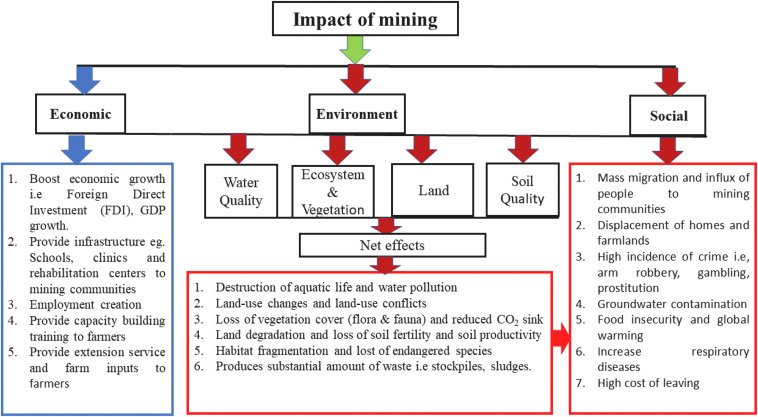
Mining native elements, such as gold, silver, copper, and platinum, can have significant environmental impacts due to the processes involved in their extraction, processing, and refining. These impacts vary depending on the mineral being mined, the methods used, and the local environment. Below are the primary environmental concerns associated with the mining of native elements and strategies for mitigating these issues:
1. Habitat Destruction and Land Degradation
Impact:
- Mining operations, especially open-pit mining, can lead to significant land disturbance. Large areas of land are cleared for exploration and extraction, causing habitat loss for wildlife, flora, and fauna.
- Soil erosion and land degradation occur due to deforestation, removal of vegetation, and the excavation of large quantities of earth. This leads to loss of biodiversity and can affect the local ecosystem.
- In the case of placer mining (often used for gold), watercourses may be diverted or polluted, further degrading the land and affecting surrounding communities that rely on these resources.
Mitigation Strategies:
- Rehabilitation and Reclamation: Mining companies can engage in reforestation and land reclamation programs to restore habitats after mining operations are completed. This can involve planting native vegetation, controlling soil erosion, and reintroducing wildlife.
- Sustainable Mining Practices: Implementing best management practices that minimize the footprint of mining operations, such as modular mining that reduces the land cleared, and careful planning to preserve habitats.
- Waste Minimization: Developing methods to reduce the generation of waste rock, tailings, and other byproducts that could lead to further land degradation.
2. Water Pollution and Depletion
Impact:
- Water contamination can occur when chemicals used in the extraction process (such as cyanide for gold mining or acid from smelting) seep into groundwater or surface water. For example, cyanide spills or acid mine drainage (AMD) can cause the acidification of water bodies, harming aquatic ecosystems and contaminating drinking water sources.
- In some cases, water depletion can also occur if large quantities of water are required for processing ores (especially in dry regions), reducing the available supply for local communities, agriculture, and wildlife.
- Placer mining operations can also cause sedimentation of rivers, disrupting aquatic life.
Mitigation Strategies:
- Water Treatment: Using advanced water treatment methods to neutralize or remove harmful chemicals, such as cyanide detoxification methods or lime treatment to neutralize acidic water.
- Water Recycling: Implementing closed-loop water systems in mining operations to minimize water consumption and reduce the potential for contamination.
- Safe Chemical Use: Switching to safer chemicals for extraction (e.g., using thiosulfate instead of cyanide for gold extraction), and using non-toxic alternatives for processing when possible.
- Preventive Measures for AMD: Using isolated containment systems or building containment ponds to prevent the seepage of acidic water into surrounding ecosystems. Proper tailings management can also reduce the risk of acid mine drainage.
3. Air Pollution
Impact:
- Dust emissions are a common problem in mining operations, particularly during the crushing and grinding of ores. Dust can contain toxic metals such as lead, arsenic, and cadmium, which can harm both the environment and human health.
- In smelting operations, air emissions of sulfur dioxide (SO₂) and particulate matter can lead to acid rain, which harms vegetation, soil quality, and water systems.
- Greenhouse gas emissions can also be significant in mining operations, especially when heavy machinery or fossil fuels are used for transportation, energy production, and ore extraction.
Mitigation Strategies:
- Dust Control: Using water sprays, dust suppression chemicals, or vegetative cover to reduce the amount of airborne dust generated during mining operations.
- Emission Scrubbers: Installing scrubber systems in smelting furnaces to reduce sulfur dioxide emissions and prevent acid rain formation.
- Green Energy: Implementing renewable energy sources such as solar or wind power in mining operations to reduce the carbon footprint and decrease reliance on fossil fuels.
4. Toxic Waste and Tailings Management
Impact:
- Mining operations produce large quantities of waste rock and tailings (the byproducts of ore extraction), which may contain harmful chemicals and metals. Improper management of these materials can lead to soil contamination, toxic runoff, and long-term environmental damage.
- Cyanide leaching in gold mining, for example, generates large quantities of cyanide-laden tailings that must be properly stored to prevent leakage into the environment.
- Heavy metals from waste materials (like arsenic or mercury) can leach into the soil and water, creating long-lasting contamination.
Mitigation Strategies:
- Tailings Storage Facilities (TSFs): Designing and maintaining secure tailings ponds or dry-stack tailings systems to prevent leakage and ensure proper containment of toxic waste.
- Use of Cyanide Detoxification: After cyanide is used in gold extraction, it can be detoxified using chemical processes that neutralize the cyanide, making it safer for disposal.
- Sustainable Mining Technologies: Investing in technologies that reduce the need for toxic chemicals in processing, such as biotechnological methods for ore extraction or gravity-based processing that generates less toxic waste.
5. Noise Pollution and Human Health Impacts
Impact:
- Mining activities often involve the use of large machinery, explosives, and transportation, all of which contribute to high noise levels. This can have negative impacts on nearby wildlife, especially mammals and birds, which rely on sound for communication and navigation.
- Workers and nearby communities may also be at risk from prolonged exposure to high levels of noise, which can lead to hearing loss or increased stress and anxiety.
- The use of chemicals like cyanide, mercury, and sulfuric acid also poses a health risk to miners, nearby communities, and ecosystems.
Mitigation Strategies:
- Noise Reduction Technologies: Using enclosed machinery, vibration isolation, and sound barriers to reduce noise pollution from mining operations.
- Health Monitoring and Safety: Implementing strict safety standards for workers, including the use of personal protective equipment (PPE) such as hearing protection, and conducting regular health assessments.
- Community Engagement: Mining companies can work with local communities to monitor environmental and health impacts and ensure that mitigation measures are in place.
6. Energy Consumption and Carbon Footprint
Impact:
- Mining operations are energy-intensive, requiring substantial amounts of power for drilling, excavation, crushing, processing, and transportation.
- The carbon footprint of mining is significant, particularly if the energy used is derived from fossil fuels. Mining contributes to global warming through the release of carbon dioxide (CO₂) and other greenhouse gases.
Mitigation Strategies:
- Energy Efficiency: Optimizing mining processes and equipment to reduce energy consumption, such as using automated systems or efficient grinding techniques.
- Renewable Energy: Transitioning to solar, wind, or hydropower to reduce the carbon emissions associated with mining operations.
- Carbon Capture and Storage: Employing technologies that capture and store carbon emissions from mining operations.
Conclusion
Mining native elements presents significant environmental challenges, from land degradation and water pollution to air contamination and energy consumption. However, many of these impacts can be mitigated through the use of sustainable mining practices, such as reclamation, water recycling, dust suppression, and the use of green energy. Additionally, improving tailings management and adopting eco-friendly extraction techniques can help reduce the long-term environmental footprint of native element mining. By focusing on responsible mining and environmental stewardship, the industry can help reduce its adverse impacts while continuing to provide essential materials for modern society.
Hashtags
#NativeElementMining #EnvironmentalImpact #MiningPollution #SustainableMining #EcoMining #MiningSustainability #MiningWaste #EnvironmentalRisks #ResponsibleMining #GreenMining #EcoFriendlyMining #MiningReclamation #PollutionControl #MineralConservation #EnvironmentalProtection #MineWasteManagement #MiningMitigation #SustainableExtraction #EcoMiningSolutions #MineEnvironmentalManagement