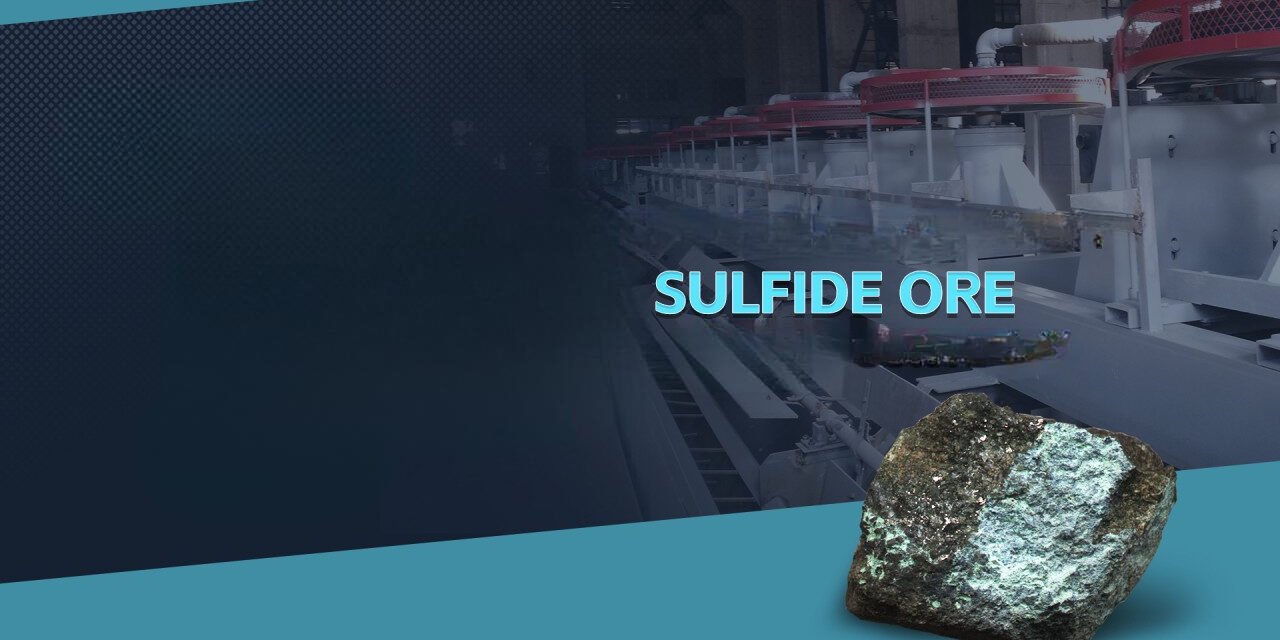
The beneficiation of sulfide ores involves a variety of techniques aimed at extracting the valuable metals, such as copper, gold, nickel, and zinc, from the associated sulfide minerals. Below are the most effective beneficiation techniques used to process sulfide ores:
1. Froth Flotation
- Overview: Froth flotation is the most widely used method for concentrating sulfide ores, particularly for copper, lead, zinc, and nickel. The process relies on the differential surface properties of the minerals in the ore.
- How it Works:
- Ore is crushed and ground into a fine slurry.
- Chemical reagents (collectors, frothers) are added to make the valuable sulfide minerals hydrophobic (water-repellent).
- Air is bubbled through the slurry, and the hydrophobic sulfide particles attach to the bubbles and float to the surface, forming a froth.
- The froth is then skimmed off, leaving behind unwanted gangue materials.
- Benefits: Efficient for separating sulfide minerals from non-sulfide gangue, yielding high-purity concentrates of the desired metals.
2. Gravity Separation
- Overview: Gravity separation is used when there is a significant difference in density between the valuable sulfide minerals and the gangue material.
- How it Works:
- Ore is crushed and then subjected to gravitational forces, such as in shaking tables, spiral classifiers, or jigging.
- The heavier sulfide minerals settle more quickly than the lighter gangue materials, allowing for physical separation.
- Benefits: Simple, cost-effective, and can be used in combination with other methods for further upgrading concentrates.
3. Magnetic Separation
- Overview: Some sulfide ores, particularly those containing magnetic sulfide minerals (e.g., magnetite or pyrrhotite), can be beneficiated using magnetic separation.
- How it Works:
- The ore is ground to a fine size and passed through a magnetic field.
- Magnetic minerals are attracted to the magnetic separator, while non-magnetic gangue materials pass through.
- Benefits: Efficient for ores with significant amounts of magnetic minerals, particularly in combination with flotation or other techniques.
4. Leaching
- Overview: Leaching is used to dissolve metal-containing minerals from ore and separate them from gangue material. For sulfide ores, bioleaching and pressure oxidation are common methods.
- Types of Leaching:
- Heap Leaching: Used mainly for low-grade sulfide ores like gold and copper. The ore is piled in a heap, and a leaching solution (typically cyanide or sulfuric acid) is applied to extract the metals.
- Bioleaching: Involves the use of microorganisms to oxidize sulfides (such as pyrite or chalcopyrite) and liberate metals like copper and gold.
- Pressure Oxidation: High-pressure and high-temperature oxidation of sulfide ores to release metals into solution for further extraction (e.g., for gold or copper).
- Benefits: Effective for extracting metals from refractory ores that cannot be easily processed by traditional methods.
5. Roasting
- Overview: Roasting is used to convert sulfide ores into oxides or sulfates, making the metal easier to extract through subsequent processes like leaching or smelting.
- How it Works:
- The sulfide ore is heated in the presence of oxygen.
- The sulfur combines with oxygen to form sulfur dioxide gas (SO₂), leaving behind metal oxides (e.g., copper oxide or zinc oxide).
- Benefits: Useful for processing refractory sulfide ores, especially when direct extraction is not viable.
6. Smelting
- Overview: Smelting is used for the direct extraction of metals from sulfide ores through a high-temperature, chemical reduction process.
- How it Works:
- Ore is heated in a furnace with a reducing agent (such as coke) to convert the metal sulfides into pure metals.
- For example, in copper smelting, copper sulfide (Cu₂S) reacts with oxygen to form copper and sulfur dioxide.
- Benefits: Allows the direct production of refined metals, especially in large-scale operations.
7. Flotation + Leaching Combination
- Overview: In some cases, a combination of flotation and leaching is used to enhance the recovery of metals, especially from complex sulfide ores.
- How it Works:
- The ore is first concentrated by flotation to produce a sulfide concentrate.
- The concentrate is then subjected to leaching (often pressure oxidation or bioleaching) to extract the metals, such as gold or copper.
- Benefits: More efficient extraction from complex ores, enabling the recovery of metals that might be difficult to extract using a single method.
8. Hydrometallurgical Techniques (Solvent Extraction and Electrowinning)
- Overview: Hydrometallurgy is increasingly used for processing sulfide ores, particularly in the extraction of copper, nickel, and cobalt.
- Solvent Extraction: This involves the use of solvents to selectively extract metals from an aqueous solution. For example, copper can be extracted from an acidic leach solution using an organic solvent.
- Electrowinning: After solvent extraction, the metal is recovered by electrowinning, where an electric current is passed through the solution to deposit the metal onto cathodes.
- Benefits: Allows for efficient, selective recovery of metals and reduces energy consumption compared to traditional methods like smelting.
The most effective beneficiation techniques for sulfide ores depend on the specific characteristics of the ore and the target metal