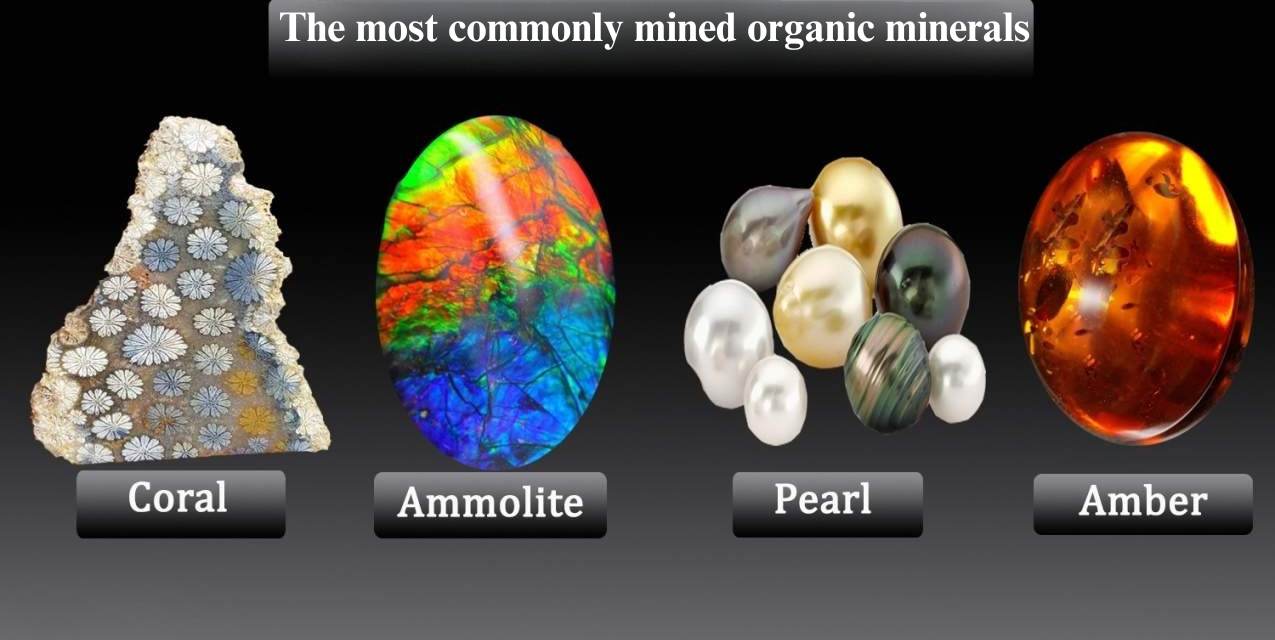
The most commonly mined organic minerals are typically those that contain significant amounts of carbon-based compounds, often derived from biological processes. These organic minerals are primarily used in energy production, chemical manufacturing, and agricultural applications. Here are some of the most widely mined organic minerals and their key industrial applications:
1. Coal
- Key Applications:
- Energy Production: The primary use of coal is as a fuel in power plants to generate electricity. It is burned to produce steam, which drives turbines to produce electricity.
- Industrial Use: Coal is used in steel production as a coke to help reduce iron ore to iron in blast furnaces.
- Chemical Production: Coal is also a source of by-products such as coal tar and coal gas, which are used in chemical manufacturing, including in the production of plastics, fertilizers, and solvents.
2. Oil Shale
- Key Applications:
- Oil Production: Oil shale contains kerogen, which can be converted into liquid hydrocarbons (oil) through a process called retorting or hydraulic fracturing. The oil extracted from shale is used in the same way as crude oil for fuel production.
- Gas Production: Oil shale also produces natural gas upon processing, contributing to the supply of methane and syngas.
- Chemical Feedstocks: Oil shale provides chemicals such as phenols, naphthalene, and benzene for the chemical industry.
3. Peat
- Key Applications:
- Fuel: In some regions, particularly in Europe, peat is used as a fuel in power plants and home heating.
- Agriculture: Peat is widely used in the horticulture industry for soil conditioning and as a component of potting soils due to its moisture retention properties.
- Biomass Energy: Peat is also a form of biomass used in renewable energy production, contributing to bioenergy.
4. Tar Sands (Oil Sands)
- Key Applications:
- Petroleum Extraction: Tar sands contain a mixture of bitumen (a heavy, viscous form of petroleum) and sand, which can be processed to extract synthetic crude oil through techniques like steam-assisted gravity drainage (SAGD) and open-pit mining.
- Synthetic Fuels: The oil extracted from tar sands is refined into gasoline, diesel, and other petroleum products.
5. Bitumen
- Key Applications:
- Road Construction: Bitumen is widely used as a key component of asphalt for paving roads due to its binding properties.
- Waterproofing: Bitumen is used for waterproofing applications, such as roofing materials (bituminous membranes) and dam linings.
- Petroleum Industry: Bitumen is processed to produce refined petroleum products like fuel oils, lubricants, and asphalt.
6. Natural Gas (Methane) from Coal Beds
- Key Applications:
- Energy Production: Methane extracted from coal beds, known as coalbed methane (CBM), is used as a cleaner alternative to coal for generating electricity and as a fuel for heating and industrial processes.
- Chemical Feedstocks: Methane is a key component of the natural gas industry and serves as a raw material for the production of ammonia (for fertilizers), methanol, and other chemicals.
Environmental Considerations:
- Coal, oil shale, and tar sands extraction processes are often associated with environmental concerns, including high carbon emissions, water contamination, and land degradation.
- Peat extraction can lead to wetland destruction and loss of biodiversity.