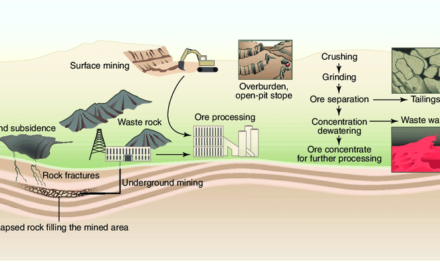
Researchers are actively developing more sustainable and eco-friendly methods for rare earth element (REE) extraction and processing to reduce environmental impacts and reliance on traditional mining techniques. Some of the key advancements in this area include:
1. Bioleaching & Microbial Extraction
- Researchers are using bacteria and fungi to extract REEs from ores, waste, and low-grade deposits.
- Certain microbes, such as Acidithiobacillus ferrooxidans and Leptospirillum ferrooxidans, can dissolve REEs from minerals without the need for toxic chemicals.
- Bioleaching reduces energy consumption and eliminates hazardous waste.
2. Phytomining (Plant-based Extraction)
- Some plants, known as hyperaccumulators, can absorb REEs from the soil and store them in their biomass.
- Researchers are cultivating plants like Dicranopteris linearis to extract REEs from contaminated sites or mine tailings.
- This method offers a low-impact alternative to traditional mining.
3. Ionic Liquid & Deep Eutectic Solvent Extraction
- Instead of toxic organic solvents, researchers are developing ionic liquids and deep eutectic solvents (DES) for REE extraction.
- These solvents are non-volatile, recyclable, and can selectively separate REEs with minimal waste production.
- DES-based extraction methods have been tested on mine tailings and coal ash.
4. Urban Mining & Recycling from E-Waste
- Recovering REEs from discarded electronics, batteries, and magnets reduces dependence on primary mining.
- Researchers are using hydrometallurgical and electrochemical techniques to extract REEs from waste, reducing landfill pollution.
- Supercritical fluid extraction and solvent-free electrolysis are emerging as cleaner alternatives.
5. Membrane & Nanofiltration Technologies
- New filtration membranes using nanomaterials allow for selective separation of REEs from mining wastewater and industrial effluents.
- These systems require less chemical usage and can recover high-purity REEs with lower environmental impact.
6. Plasma & Electrochemical Extraction
- Researchers are exploring plasma-based techniques to extract REEs directly from ores without using acids or solvents.
- Electrochemical methods, such as molten salt electrolysis, can recover REEs from slag and waste with minimal emissions.
7. Rare Earth Recovery from Coal & Industrial Waste
- Coal ash and red mud (a byproduct of aluminum production) contain significant REE concentrations.
- Scientists are developing acid-free and electrochemical methods to extract REEs from these industrial byproducts.
- This approach helps in waste utilization and resource recovery.
8. Green Chemistry in REE Processing
- The use of biodegradable chelating agents, such as natural organic acids, is being explored to replace harmful chemical reagents.
- Researchers are integrating machine learning to optimize separation processes, minimizing energy and resource usage.
These advancements are making REE extraction and processing more environmentally friendly while ensuring a stable supply of these critical elements for clean energy technologies, electronics, and defense applications.