Sulfide mining involves extracting metals from sulfide ores, which are commonly found in minerals like copper, gold, zinc, and nickel. While sulfide mining is essential for obtaining these valuable metals, it poses significant environmental risks, particularly in terms of acid mine drainage (AMD) and the associated environmental contamination. Here’s an overview of the environmental risks and how AMD can be prevented:
Environmental Risks of Sulfide Mining:
- Acid Mine Drainage (AMD):
- What is AMD?
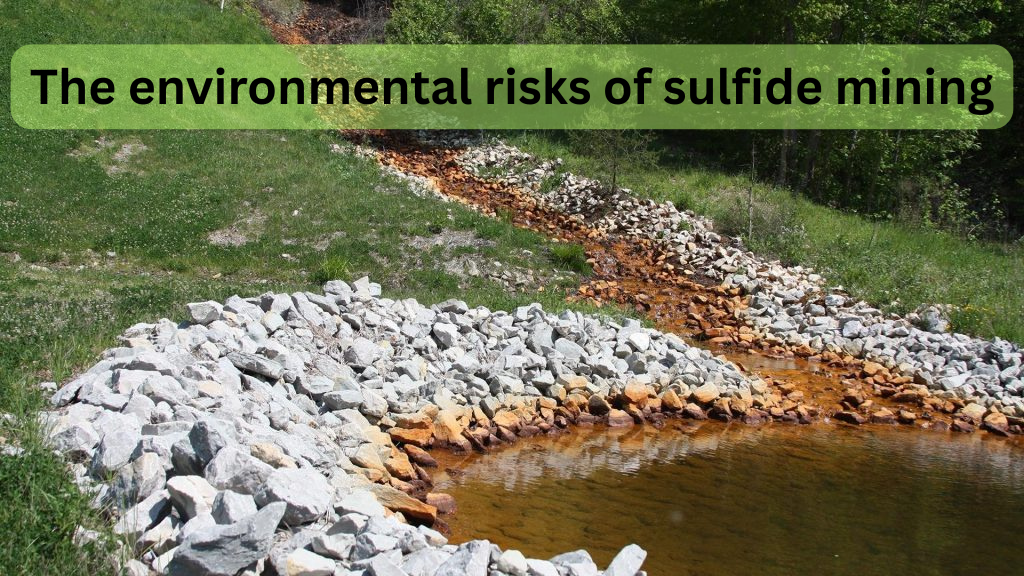
- AMD is a major environmental risk of sulfide mining. It occurs when sulfide minerals (such as pyrite or chalcopyrite) are exposed to oxygen and water, causing them to oxidize and produce sulfuric acid. This acid, in turn, leaches out heavy metals from surrounding rocks, creating contaminated water with a low pH.
- Impact of AMD:
- The resulting acidic water can pollute local waterways, harming aquatic ecosystems by reducing pH levels, which harms fish and other aquatic life.
- Heavy metals, such as copper, arsenic, lead, and cadmium, may be released, contaminating drinking water sources and causing long-term environmental damage.
- Soil degradation occurs as the acid alters the chemical properties of the soil, making it unsuitable for plant growth.
- What is AMD?
- Tailings Disposal:
- After sulfide ores are processed, large quantities of waste materials, known as tailings, are generated. These tailings often contain residual sulfur compounds and metals, which can leach into the environment over time.
- If tailings are not adequately contained or treated, they can contribute to soil and water contamination, especially through leachate formation.
- Heavy Metal Contamination:
- The oxidation of sulfide ores can release heavy metals like arsenic, lead, zinc, and copper into the environment.
- These metals can accumulate in local ecosystems and enter the food chain, posing a risk to both wildlife and human populations.
- Erosion and Habitat Disruption:
- Mining operations, especially open-pit mines, can cause erosion and habitat destruction, altering landscapes and affecting wildlife habitats. The removal of large amounts of earth and vegetation can lead to the loss of biodiversity.
- Air Pollution (Dust and Emissions):
- The mining and processing of sulfide ores can release particulate matter (dust) and sulfur dioxide (SO₂) into the air, contributing to air pollution and potentially leading to acid rain formation, which exacerbates environmental degradation.
Preventing Acid Mine Drainage (AMD):
- Proper Mine Closure and Reclamation:
- Revegetation: Planting vegetation over mine tailings and disturbed areas can help prevent the exposure of sulfide minerals to oxygen and water, reducing the likelihood of oxidation and acid production.
- Covering Tailings: Applying covers (e.g., impermeable layers, geosynthetic membranes, or soil covers) over tailings storage facilities helps minimize water infiltration and prevent the oxidation of sulfide minerals.
- Flooding: In some cases, flooding mine workings with water (creating a water cover) can prevent oxygen from reaching sulfide minerals and reduce the risk of acid generation.
- Water Management:
- Acid-Neutralizing Chemicals: Adding alkaline materials such as lime or sodium bicarbonate to mine tailings or leachates can neutralize the acid produced by sulfide oxidation, increasing the pH and reducing the solubility of harmful metals.
- Collection and Treatment of AMD: Installing AMD collection systems (e.g., ponds or sumps) to capture acid water and treat it before it can be released into the environment. This treatment often involves neutralization with alkaline agents and precipitation of metals.
- Bioremediation: Using natural or engineered microorganisms to treat AMD by promoting the precipitation of metals and neutralization of acidity is a promising method of long-term remediation.
- Passive Treatment Systems:
- Constructed Wetlands: In some cases, constructed wetlands can be used to treat AMD. The wetland plants and microbial communities can naturally neutralize the acid and remove dissolved metals, improving water quality before it is released into the environment.
- Anoxic Limestone Drains (ALDs): These systems treat AMD by passing acidic water through a bed of limestone, where anaerobic bacteria reduce sulfur compounds and raise the pH of the water, helping to precipitate metals and neutralize acidity.
- Reducing Sulfide Exposure:
- Minimizing Sulfide Exposure: During mining and ore processing, efforts should be made to reduce the exposure of sulfide ores to air and water. This can be done by maintaining ore stockpiles with minimal moisture exposure or by using water covers to prevent oxidation.
- Monitoring and Early Detection:
- Continuous monitoring of water quality, soil conditions, and surrounding ecosystems is crucial for detecting early signs of AMD formation. Prompt action can be taken to address issues before they become significant environmental problems.
- Use of Advanced Technologies:
- Neutralizing Filters: Technologies like alkaline filter beds or biosystems are being developed to neutralize acidic waters from sulfide deposits and to remove harmful metals before the water enters natural water systems.
- Microbial Sulfate Reduction: Using sulfate-reducing bacteria to convert sulfur compounds into insoluble sulfides that can be removed from the water. This method offers a sustainable way to mitigate AMD in the long term.
Conclusion:
Sulfide mining presents significant environmental risks, with acid mine drainage (AMD) being one of the most serious challenges. Preventing AMD requires a combination of water management, mine reclamation, treatment technologies, and sulfide exposure reduction. By using innovative solutions like passive treatment systems, bioremediation, and proper tailings management, mining operations can minimize the environmental impact and mitigate the risks associated with AMD, ensuring more sustainable mining practices.