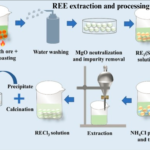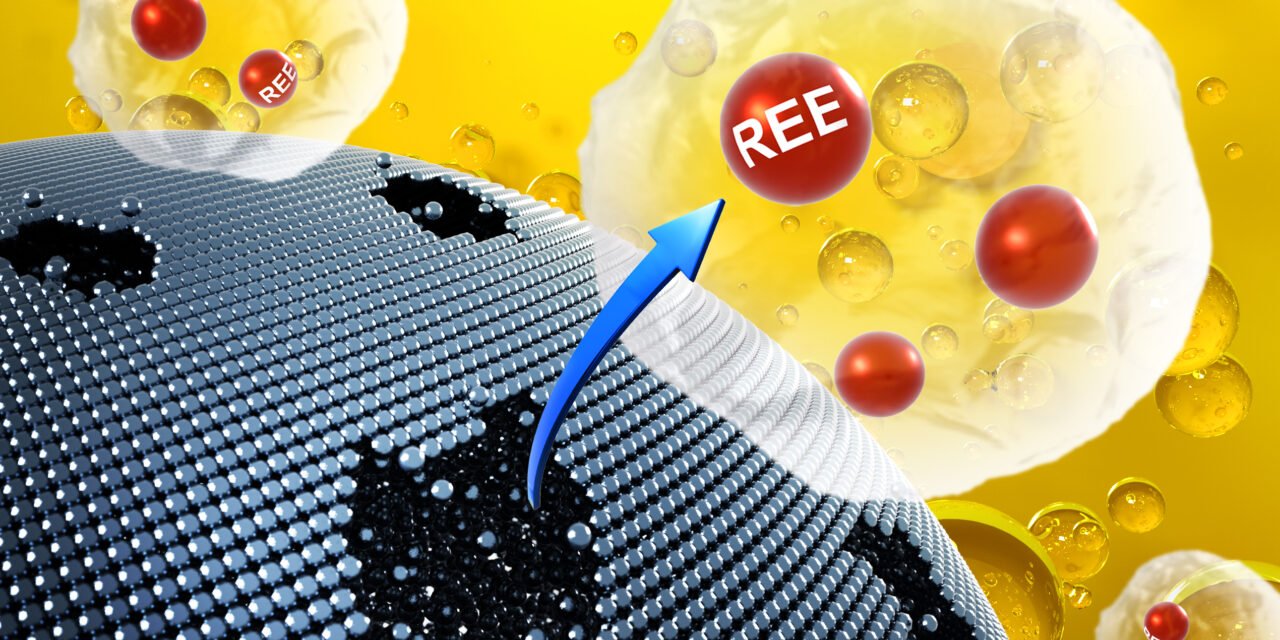
Biomining is emerging as a promising method for extracting rare earth elements (REEs) and critical minerals, which are vital for high-tech industries such as electronics, renewable energy, defense, and electric vehicles. REEs, including elements like neodymium, dysprosium, and lanthanum, are essential for manufacturing high-performance magnets, batteries, and other advanced materials. Traditional mining and extraction methods for these materials are often environmentally harmful and energy-intensive, creating a strong incentive to explore more sustainable alternatives like biomining.
Biomining Integration in Rare Earth Element (REE) and Critical Mineral Extraction
1. Bioleaching of Rare Earth Elements (REEs)
- Bioleaching involves using microorganisms such as bacteria and fungi to extract metals from ores or waste materials. In the case of REEs, bioleaching can be used to dissolve and mobilize REEs from their mineral forms, making them easier to extract.
- Acidithiobacillus ferrooxidans, a bacterium commonly used in bioleaching, can be applied to REE-bearing ores like bastnäsite or monazite. These ores are rich in rare earth minerals, and bioleaching can help break down the minerals, releasing the REEs into solution.
- Research has shown that bioleaching can be a viable alternative to conventional extraction methods like solvent extraction and hydrometallurgical techniques, which often generate large amounts of waste and require harsh chemicals.
2. Use of Microorganisms in the Extraction of Critical Minerals
- Critical minerals, such as lithium, cobalt, nickel, and graphite, are essential for the production of batteries, especially for electric vehicles and renewable energy storage. These minerals can also be extracted using biomining techniques.
- Bacteria like Leptospirillum ferrooxidans and Acidithiobacillus thiooxidans can be employed for bioleaching metals like nickel and cobalt from sulfide ores. By using these microorganisms, the metals are mobilized and brought into solution, making them easier to separate and recover.
- Biosorption, the process by which microorganisms or plants absorb and concentrate metals, has been explored for extracting lithium from brines or graphite from ores. Certain fungi and algae have been shown to have the potential for lithium biosorption, effectively concentrating the element from solutions with low metal concentrations.
3. Recovery of REEs and Critical Minerals from Industrial Waste and E-Waste
- Recycling and recovery of critical minerals from industrial waste and electronic waste (e-waste) are becoming increasingly important as demand for these materials rises. Biomining can be integrated into the process of recovering REEs and critical minerals from e-waste, old batteries, and other discarded electronics.
- Bioleaching can be applied to e-waste containing valuable metals like gold, copper, lithium, cobalt, and rare earth elements. Microorganisms can break down the metals and make them easier to extract. This method has the added benefit of reducing the environmental footprint associated with e-waste disposal and providing a sustainable alternative to traditional recycling methods.
- Biosorption can also play a role in recovering critical minerals from leachates and residues generated during the recycling of batteries, solar panels, and other electronic devices.
4. Bioaccumulation for Selective Metal Recovery
- Some microorganisms have the ability to bioaccumulate certain metals by absorbing and concentrating them in their cells. This selective process can be used to recover specific critical minerals from complex waste streams.
- Fungi, for example, can accumulate REEs from ores and waste materials. Research has demonstrated that certain species of fungi can selectively accumulate lanthanides like neodymium and cerium, which are essential for high-tech applications, including magnets used in wind turbines and electric vehicles.
- Similarly, bacteria can be used to selectively accumulate cobalt, nickel, and rare earth elements, creating a concentrated biomass that can be processed to recover the valuable metals.
5. Bioremediation of Mining Tailings Containing Critical Minerals
- Many mining operations produce tailings and waste materials that still contain significant amounts of critical minerals and REEs. These tailings can often be a source of secondary raw materials if the remaining metals are efficiently recovered.
- Biomining techniques can be used to treat tailings from REE mining operations, nickel, cobalt, and lithium extraction sites. Microbial processes, like bioleaching, can recover these critical minerals from residual materials that would otherwise be discarded.
- In addition, bioremediation can help neutralize toxic substances, such as heavy metals or acid mine drainage (AMD), generated during the extraction of REEs and critical minerals. Microbial communities can detoxify harmful substances while simultaneously recovering valuable metals from tailings and waste.
6. Research and Innovation in Synthetic Biology for Mineral Extraction
- Emerging research in synthetic biology is expanding the potential of biomining. Scientists are working on genetically engineered microorganisms that can be tailored to enhance their ability to extract specific REEs and critical minerals more efficiently.
- For example, engineered bacteria or yeast could be designed to enhance the bioleaching of metals like cobalt, nickel, and lithium or to increase the biosorption capacity for REEs. These microorganisms could be optimized to work in specific mining environments or to target certain types of ores or waste materials.
- Genetic modifications could also help improve the resilience of these microorganisms in harsh environments, such as extreme acidity or high metal concentrations, making biomining more reliable and scalable.
Advantages of Biomining for REEs and Critical Minerals
- Environmental Sustainability: Biomining offers a more sustainable alternative to conventional mining methods, which often involve large amounts of water, energy, and toxic chemicals. Biomining processes generally have a lower environmental impact and can help in the remediation of polluted sites.
- Lower Energy Requirements: Compared to traditional extraction methods, biomining typically operates at ambient temperatures, requiring significantly less energy. This is particularly important in the context of energy-intensive processes used to extract and refine REEs and critical minerals.
- Access to Secondary Sources: Biomining makes it possible to extract critical minerals and REEs from secondary sources, such as tailings, waste materials, and e-waste, providing a sustainable means of recycling and reusing these valuable resources.
- Selective Recovery: Microorganisms used in biomining can be engineered or selected to recover specific metals from complex ores or waste streams, improving the efficiency of extraction for rare or scarce minerals.
Challenges and Barriers
- Slower Processing Rates: Biomining processes, especially bioleaching, are typically slower than conventional methods such as solvent extraction or smelting. This slower rate of extraction can limit the throughput of biomining operations, especially for large-scale commercial projects.
- Scale-Up Challenges: Scaling up biomining for critical minerals and REEs requires careful optimization of microbial processes to work effectively at large scales. The complexity of controlling factors like temperature, acidity, oxygen levels, and microbial populations can present challenges.
- Regulatory and Environmental Concerns: While biomining is more environmentally friendly than traditional methods, it still requires oversight to ensure that non-native microorganisms do not harm local ecosystems. Regulatory frameworks for biomining are still evolving, and concerns over the release of genetically modified organisms (GMOs) need to be addressed.
Conclusion
Biomining is being increasingly integrated into the extraction of rare earth elements (REEs) and critical minerals for high-tech industries, offering a sustainable and cost-effective alternative to conventional mining methods. While still in the research and development phase for many applications, biomining has demonstrated potential in extracting valuable metals from low-grade ores, e-waste, tailings, and secondary sources. As advancements in microbial technology and synthetic biology continue, biomining could become a key player in meeting the growing demand for REEs and critical minerals while minimizing the environmental footprint of traditional extraction techniques.
Hashtags
#BiominingForREEs #CriticalMineralsExtraction #GreenTechMining #EcoFriendlyMetals #SustainableRareEarthMining #BioleachingREEs #RareEarthElements #BiominingInnovation #HighTechMinerals #GreenTechMetals #SustainableMining #CircularEconomy #CleanTech #MineralRecovery #EcoInnovation #GreenMining #ResourceEfficiency #FutureOfMining #EnvironmentalSustainability #TechForGood