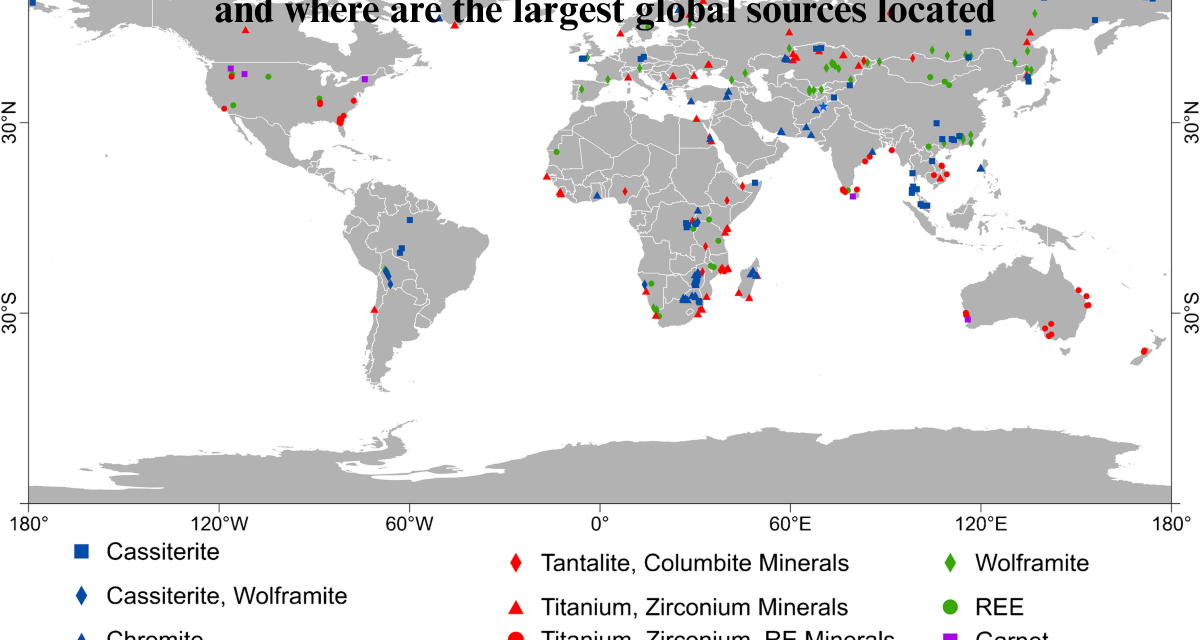
Clay mineral deposits form primarily through the weathering and alteration of pre-existing rocks, typically silicate minerals, over long periods of time. This weathering process occurs due to physical, chemical, and biological factors that break down the original rocks into finer particles, including clay minerals. Here’s a breakdown of how clay minerals form and where the largest global sources are located:
Formation of Clay Mineral Deposits
- Weathering and Alteration:
- Physical Weathering: The breakdown of rocks into smaller particles through mechanical forces like wind, water, and temperature changes.
- Chemical Weathering: Over time, minerals in rocks undergo chemical reactions with water, oxygen, and acids in the environment, which leads to the formation of clay minerals. For example, feldspar (a common mineral in granite) can break down to form kaolinite, a type of clay.
- Biological Weathering: Biological organisms, including plant roots and microorganisms, can contribute to the weathering process by producing organic acids or exerting physical pressure, aiding in the breakdown of rocks into fine clay particles.
- Sedimentary Process:
- Clay minerals typically form in sedimentary environments, where fine particles are transported by water (rivers, lakes, seas) and eventually accumulate as sediments. Over time, these sediments become compacted, forming clay-rich layers that can eventually turn into clay deposits.
- In river systems, clay particles can be carried by water and deposited in slow-moving areas such as floodplains, lakebeds, and deltas.
- Marine environments: Clays also form in marine environments when fine particles from the weathering of continental rocks are carried into the ocean by rivers and settle to the sea floor.
- Types of Clay Deposits:
- Residual Deposits: These deposits form in the location where the parent rock was weathered. They accumulate directly on the surface where the weathering process occurs.
- Alluvial and Fluvial Deposits: Clay deposits that have been transported and redeposited by rivers and streams. These deposits are often found in floodplains and river deltas.
- Marine Deposits: Clay minerals can accumulate on the ocean floor through the settling of fine particles brought by rivers, tidal currents, or wind. These deposits are typically found in deep-water environments.
- Lacustrine Deposits: Clays can form in lakes where sedimentation is slow, allowing fine particles to settle. These deposits often contain kaolinite and smectite.
Major Clay Deposits Around the World
- United States:
- The U.S. is home to significant clay mineral deposits, especially kaolin (used in paper production). Major kaolin-producing regions include Georgia, South Carolina, and Alabama.
- Bentonite deposits, primarily used in drilling fluids and industrial applications, are abundant in states like Wyoming, Montana, and South Dakota.
- Ball clay is found in Kentucky, Tennessee, and Missouri, where it is used in ceramics.
- China:
- China has substantial reserves of kaolin, used in various industries, particularly in ceramics and paper production. Major deposits are found in regions like Jiangxi, Guangdong, and Hunan provinces.
- The country also has significant bentonite and smectite deposits used in oil drilling and environmental applications.
- Brazil:
- Brazil is one of the leading producers of kaolin, particularly in the Amazon Basin and northeastern states like Paraíba and Bahia.
- The country also has rich deposits of ball clay and bentonite used for industrial purposes.
- India:
- India is a major producer of kaolin, primarily in the states of Tamil Nadu, Kerala, and Rajasthan.
- The Bihar region is known for its bentonite deposits, while Rajasthan and Gujarat are sources of ball clay.
- United Kingdom:
- The UK has significant reserves of kaolin in regions like Cornwall and Devon, with the majority of the production used in ceramics and paper industries.
- Ball clay is also abundant in the UK, especially in Dorset, and is widely used in ceramics.
- Russia:
- Russia has significant reserves of kaolin in Siberia and the Russian Far East.
- Bentonite and smectite deposits are also found in Russia, used in oil and gas drilling, as well as in the construction and foundry industries.
- Turkey:
- Turkey is known for its high-quality kaolin deposits, particularly in Afyon and Eskişehir provinces.
- Bentonite and ball clay are also important resources, with significant deposits in Ankara and Konya.
- Australia:
- Australia has abundant reserves of kaolin, particularly in the New South Wales and Queensland regions, used in ceramics and paper production.
- Bentonite deposits are found in Victoria and South Australia, while ball clay is present in Queensland.
- Africa:
- South Africa has notable reserves of kaolin, particularly in the Eastern Cape and Limpopo provinces.
- Other African countries like Morocco, Tunisia, and Egypt also have clay deposits, with a focus on kaolin and bentonite.
Clay minerals form through the weathering and alteration of rocks in various geological environments, primarily in sedimentary basins like riverbeds, lakes, and marine environments. The largest global sources of clay are found in the United States, China, Brazil, and India, with significant deposits also located in the United Kingdom, Russia, Turkey, Australia, and South Africa. These regions have rich clay resources that support industries such as ceramics, paper production, oil drilling, and construction.