Borate minerals are a group of minerals that contain boron in their chemical structure, typically combined with oxygen and other elements such as sodium, calcium, or magnesium. These minerals are critical for a variety of industrial applications due to the unique properties of boron, which is an essential element in the manufacturing of a wide range of materials and products.
Key Characteristics of Borate Minerals
- Chemical Composition: Borate minerals are primarily composed of boron oxide (B₂O₃) combined with other elements like sodium, calcium, magnesium, or potassium.
- Crystal Structure: Borate minerals generally form in crystalline or amorphous structures, and their properties depend on their specific chemical composition.
Commonly Mined Borate Minerals
Some of the most important borate minerals that are mined for industrial purposes include:
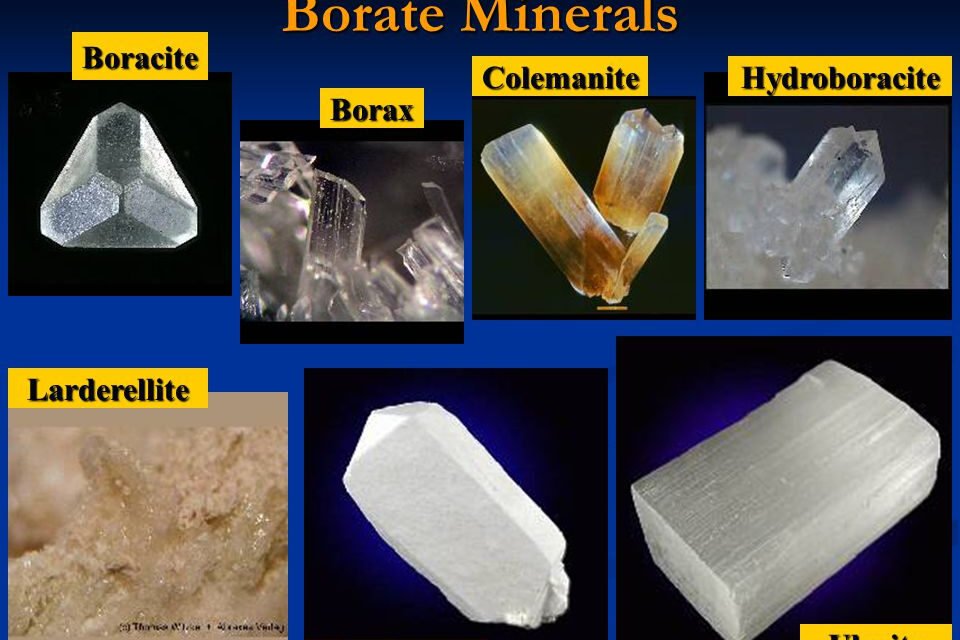
- Borax (Sodium Borate): The most well-known borate mineral, borax is used in a variety of industrial processes.
- Colemanite: A calcium borate mineral often used in the production of boron compounds.
- Ulexite: Known as “TV rock” due to its unique optical properties, ulexite is a source of boron for industrial uses.
- Pandermite: A lesser-known borate mineral, typically found in association with other borates.
Industrial Applications of Borate Minerals
Borate minerals are widely used in numerous industrial sectors because boron compounds derived from these minerals offer unique chemical properties, such as enhancing the performance of materials, improving chemical reactions, and providing specialized functionalities. Below are some of the primary applications:
1. Glass Manufacturing
- Glassmaking: Borates are added to glass to improve the strength, thermal stability, and chemical durability of the glass. Boron helps reduce the melting point of glass, which saves energy during the production process.
- Specialty Glass: Boron is especially important in the production of borosilicate glass (used in laboratory glassware and cookware), fiber-optic glass, and solar glass.
2. Agriculture (Fertilizers)
- Micronutrient in Fertilizers: Boron is a vital nutrient for plants, and borate minerals are used to produce boron-containing fertilizers. These fertilizers improve plant growth, particularly for fruit trees and vegetables, by aiding in processes such as cell wall formation, pollination, and nutrient uptake.
3. Flame Retardants
- Fireproofing: Borates, especially borax, are used as flame retardants in materials like wood, textiles, and plastics. The boron compounds help reduce flammability and combustion by promoting the formation of a protective char layer when exposed to fire.
4. Detergents and Cleaning Products
- Soaps and Detergents: Borates are used in laundry detergents, dishwashing agents, and other cleaning products. They act as builders, which enhance the cleaning efficiency of detergents by softening water, helping the detergents remove dirt, grease, and stains more effectively.
5. Ceramics and Enamels
- Ceramic Glazes: Borates are often used in ceramic glazes and enamel coatings to improve the melting process, enhance gloss, and provide a smooth finish. Boron compounds also help create durable and resistant surfaces.
- Tiles and Pottery: Boron enhances the strength and thermal properties of ceramics and pottery, making them more resistant to thermal shock.
6. Pharmaceuticals and Healthcare
- Medicinal Products: Borates are used in some pharmaceutical formulations as a buffering agent, and in the preparation of boron-based drugs that are used to treat conditions like arthritis and osteoporosis. Boron compounds also play a role in antiseptic and antibacterial products.
- Wound Healing: Certain borate compounds, such as boric acid, are used in topical applications for their antiseptic properties in wound healing and eye care products.
7. Industrial Chemicals
- Boron Compounds: Borate minerals are processed to create various boron chemicals, including boric acid, sodium borate, boron carbide, and boron nitride. These compounds have a wide range of applications in industries such as:
- Pesticides: Boron compounds are used in pesticides and herbicides.
- Lubricants: Boron compounds, especially boron nitride, are used as lubricants in high-temperature applications due to their high thermal stability and friction-reducing properties.
8. Energy Storage and Battery Technologies
- Lithium Batteries: In recent years, boron has shown potential in energy storage systems, particularly in lithium-based batteries. Borates improve the safety and efficiency of batteries by enhancing the conductivity of the electrolyte and improving the stability of the system.
- Hydrogen Storage: Boron compounds are being explored for use in hydrogen storage systems, where borates can store hydrogen gas in a more stable and manageable form.
9. Textile Industry
- Flame-resistant Fabrics: Borate-based treatments are used in textiles, particularly fire-resistant clothing and home furnishings. These treatments make fabrics more resistant to flames without compromising their flexibility or comfort.
Borate minerals are crucial to various industrial applications due to their unique chemical properties, which improve the performance and efficiency of many materials and processes.