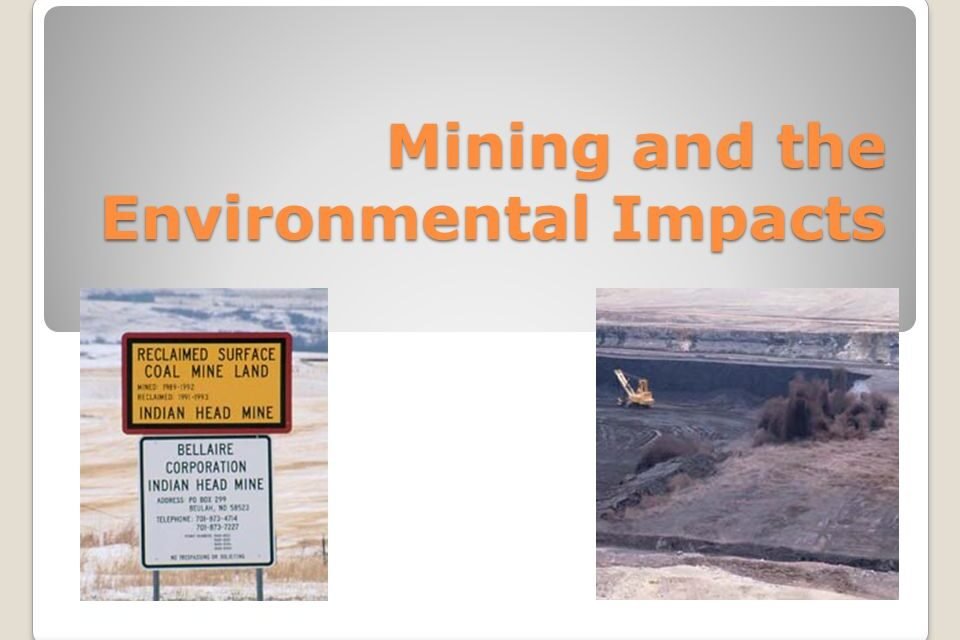
- Deforestation and Habitat Destruction
- Impact: Mining often leads to the clearing of forests and disruption of ecosystems, affecting biodiversity and wildlife.
- Mitigation:
- Implementing reforestation and habitat restoration programs.
- Adopting sustainable land use practices and minimizing land disturbance.
- Using buffer zones to protect surrounding ecosystems.
- Water Pollution (Acid Mine Drainage)
- Impact: Mining can result in the contamination of nearby water sources with toxic metals, acids, and chemicals, especially in sulfide-rich ores.
- Mitigation:
- Treating water with alkaline neutralization to prevent acid formation.
- Using water treatment plants to treat runoff water and prevent contamination.
- Implementing recycling and reuse of process water.
- Soil Erosion and Sedimentation
- Impact: Soil erosion from mining activities can lead to the siltation of rivers and wetlands, harming aquatic life.
- Mitigation:
- Establishing erosion control measures such as planting vegetation and using silt fences.
- Implementing sediment ponds to capture runoff before it reaches water bodies.
- Air Pollution (Dust and Emissions)
- Impact: Dust generated by mining operations and emissions from smelting can affect air quality and human health.
- Mitigation:
- Using dust suppression systems like water sprays, dust collectors, and fog cannons.
- Installing flue gas treatment systems to capture sulfur dioxide and other harmful gases from smelting operations.
- Greenhouse Gas Emissions
- Impact: Mining operations, particularly those involving heavy machinery and pyrometallurgical processes, contribute to CO₂ and methane emissions.
- Mitigation:
- Transitioning to renewable energy sources for mining operations.
- Using electric or hybrid vehicles and machinery to reduce carbon emissions.
- Implementing carbon capture and storage (CCS) technologies.
- Loss of Biodiversity
- Impact: Mining activities can cause the destruction of habitats and threaten species due to land use changes and pollution.
- Mitigation:
- Creating conservation areas and ensuring proper wildlife corridors.
- Conducting environmental impact assessments (EIAs) before starting mining projects.
- Implementing biodiversity-friendly practices, such as protecting endangered species and creating buffer zones.
- Waste Generation (Tailings and Slag)
- Impact: Mining produces large amounts of waste, including tailings, slag, and hazardous chemicals, which can contaminate soil and water.
- Mitigation:
- Implementing dry stacking and tailings reprocessing to reduce storage risks.
- Using slag in construction or other industries to minimize landfill waste.
- Recycling and reusing process chemicals to reduce environmental impact.
- Energy Consumption
- Impact: Mining operations require significant energy inputs, often derived from fossil fuels, contributing to resource depletion and pollution.
- Mitigation:
- Investing in energy-efficient technologies and renewable energy sources (solar, wind).
- Using waste heat recovery systems to improve energy efficiency in smelting and processing.
- Health Impacts on Local Communities
- Impact: Mining can lead to health issues for local communities, including respiratory diseases from dust exposure and contamination from heavy metals.
- Mitigation:
- Providing health and safety programs for workers and communities.
- Using environmentally friendly chemicals to reduce toxic exposure.
- Regularly monitoring water, air, and soil quality around mining areas.
- Noise Pollution
- Impact: Continuous noise from blasting, machinery, and transport can disrupt local communities and wildlife.
- Mitigation:
- Installing noise barriers and soundproofing in equipment.
- Scheduling operations during hours that minimize disturbance to nearby populations.
- Mine Closure and Post-Mining Land Use
- Impact: Abandoned mines can lead to long-term environmental problems, such as the release of toxic substances or the creation of unstable landforms.
- Mitigation:
- Implementing reclamation and remediation plans as part of the mine’s closure process.
- Restoring land to agriculture, wildlife reserves, or other sustainable uses.
- Monitoring sites for long-term environmental stability post-closure.
By incorporating these mitigation measures and investing in innovative technologies, the environmental footprint of mining can be reduced, leading to more sustainable and responsible mining practices.