Biomining is a process that uses biological organisms, such as bacteria, fungi, or plants, to extract valuable metals from ores, minerals, or waste materials. It differs significantly from traditional mining and mineral extraction methods, offering a more sustainable and potentially less harmful alternative. Here’s a detailed comparison of biomining with traditional mining and extraction methods:
1. Definition and Process
- Biomining:
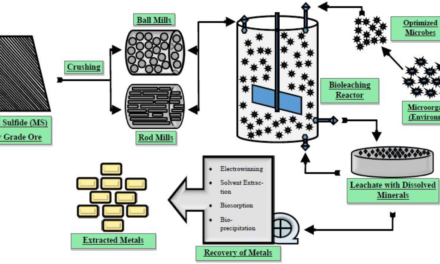
- Biomining involves the use of microorganisms (mainly bacteria) to facilitate the extraction of metals from ores. These microorganisms either leach metals from ore bodies or bio-oxidize them, breaking down metal sulfides or other compounds to release the desired metals.
- The process is most commonly used to extract metals like copper, gold, nickel, uranium, and zinc from low-grade ores that are not economically viable for conventional extraction techniques.
- The microorganisms used in biomining typically do so by either bioleaching (where bacteria dissolve the metal from the ore) or biooxidation (where bacteria help break down complex minerals to release the metal).
- Traditional Mining:
- Traditional mining refers to the physical extraction of minerals from the Earth using mechanical means, such as drilling, blasting, excavation, and transport. Once extracted, the minerals are usually processed using smelting, chemical leaching, or other high-energy methods to separate valuable metals from the ore.
- Traditional methods can be very energy-intensive and often involve the use of toxic chemicals, high temperatures, and pressure, which can result in significant environmental degradation.
2. Environmental Impact
- Biomining:
- Biomining is considered more environmentally friendly compared to traditional mining, as it typically uses less energy, fewer chemicals, and can be done at lower temperatures.
- The process produces fewer pollutants, and in some cases, microorganisms can help remediate contaminated soils or water by neutralizing toxins or heavy metals.
- However, biomining still requires land and water resources, and its impact must be carefully managed, particularly in terms of the potential for microbial contamination in local ecosystems.
- Traditional Mining:
- Traditional mining methods are often highly disruptive to the environment. For example:
- Land degradation: Large-scale excavation can cause significant destruction of ecosystems and habitats.
- Water contamination: Mining operations often use toxic chemicals (e.g., cyanide in gold mining), which can leach into nearby water sources, causing pollution and harming aquatic life.
- High energy use: Conventional mining methods require large amounts of energy for transportation, processing, and extraction.
- Traditional mining methods are often highly disruptive to the environment. For example:
3. Efficiency and Scale
- Biomining:
- Biomining is typically more efficient for extracting metals from low-grade ores or waste products that cannot be profitably processed using traditional methods. It is particularly valuable for extracting metals from ores that are difficult or too costly to treat using conventional technologies.
- The process, however, can be slower compared to traditional mining methods, and its efficiency is highly dependent on the specific microorganism used and the type of ore being processed. It is often used in smaller-scale operations, though research is ongoing to scale it up for more industrial applications.
- Traditional Mining:
- Traditional mining methods are highly efficient for high-grade ore bodies or where large-scale operations are needed. The process can quickly extract large quantities of valuable minerals, making it ideal for high-volume mining operations.
- However, the scale of traditional mining operations often leads to resource depletion and higher environmental costs over time.
4. Cost and Economic Viability
- Biomining:
- Biomining is often more cost-effective for processing low-grade ores or waste materials, especially when energy costs and environmental cleanup are taken into account.
- It requires fewer capital investments in machinery, as many biomining techniques rely on biological processes rather than mechanical or high-tech equipment.
- Biomining may, however, have longer processing times, and scalability can be an issue for very large operations, limiting its applicability in some situations.
- Traditional Mining:
- While traditional mining can be very profitable for high-grade ores, it tends to be much more capital-intensive, requiring significant investments in machinery, infrastructure, and energy.
- Costs related to environmental cleanup, regulatory compliance, and public health concerns can add to the long-term economic costs of traditional mining.
5. Types of Biomining Techniques
- Bioleaching:
- In bioleaching, microorganisms like Acidithiobacillus ferrooxidans or Leptospirillum ferrooxidans are used to oxidize metal sulfides, which releases the metal into a solution. This solution can then be treated to recover the metal.
- Bioleaching is commonly used in copper extraction but is also used for gold, uranium, and other metals.
- Biooxidation:
- Biooxidation is typically used for gold extraction, particularly from refractory ores that do not respond well to traditional cyanidation methods. In biooxidation, bacteria break down the sulfides surrounding gold particles, making them more accessible to cyanide treatment.
- Bioremediation:
- In addition to extracting metals, certain microorganisms in biomining are also used for bioremediation. This involves using bacteria or fungi to clean up environmental pollutants, such as heavy metals, from contaminated soils or water, a key advantage of biomining over traditional methods.
6. Application and Future Potential
- Biomining:
- Biomining is particularly valuable for low-grade ores, which are becoming more prevalent as higher-grade ore bodies are depleted. Additionally, it has potential applications in extracting metals from waste materials such as tailings, e-waste, or municipal waste.
- Research is ongoing to improve the efficiency, speed, and scalability of biomining, including genetic engineering of microorganisms to enhance their ability to leach or bio-oxidize metals more efficiently.
- Traditional Mining:
- Traditional mining remains the dominant method for extracting high-value, high-grade ore deposits. While there are efforts to reduce its environmental impact through cleaner technologies (e.g., green mining techniques, alternative solvents), traditional methods still face significant challenges in terms of resource depletion, environmental destruction, and high operational costs.