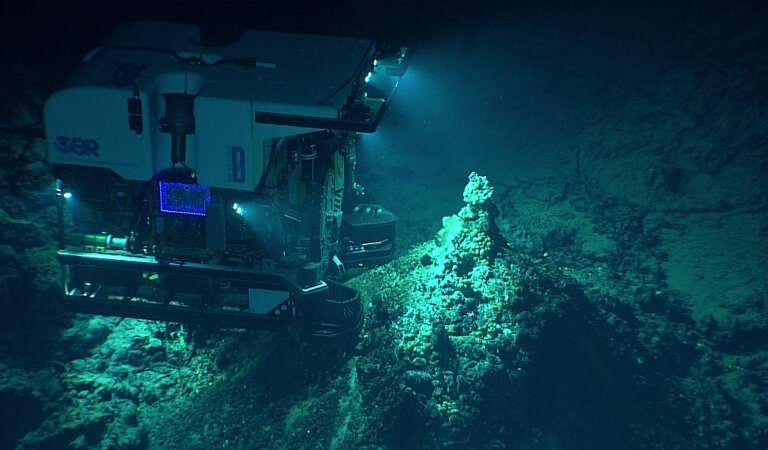
Deep-sea mining refers to the process of retrieving mineral resources from the ocean floor, typically at depths greater than 200 meters. The resources sought through deep-sea mining include valuable metals like copper, gold, silver, and rare earth elements, as well as polymetallic nodules, which are rich in manganese, nickel, and cobalt. These minerals are important for various industries, including electronics, energy production, and electric vehicles.
How Deep-Sea Mining Differs from Traditional Land-Based Mining
- Location and Environment:
- Deep-sea mining occurs beneath the ocean surface, often in harsh, high-pressure, and low-light conditions, typically using remotely operated vehicles (ROVs) or autonomous underwater vehicles (AUVs) to access the seabed.
- Land-based mining occurs on the earth’s surface or underground, where human access is far easier and more direct. It often involves removing large amounts of earth to access the minerals, leading to significant surface disruption.
- Environmental Impact:
- Deep-sea mining poses potential risks to fragile underwater ecosystems, including damage to coral reefs, disruption of marine species’ habitats, and the creation of sediment plumes that can smother marine life. The long-term consequences of these impacts are not well understood due to the relatively unstudied nature of deep-sea ecosystems.
- Land-based mining also has severe environmental impacts, including deforestation, soil erosion, water contamination, and habitat destruction. The impacts can be visible and are typically easier to monitor and manage compared to deep-sea ecosystems.
- Techniques and Technology:
- Deep-sea mining requires specialized technologies such as hydraulic dredging, remotely operated vehicles (ROVs), and cutting tools that can withstand extreme pressures and depths. It also involves transporting extracted materials to the surface, often using riser pipes or specialized vessels.
- Land-based mining generally relies on traditional equipment like excavators, trucks, and drills. The extraction methods may involve open-pit mining, underground mining, or placer mining, all of which are more familiar and established technologies.
- Resource Distribution:
- Deep-sea mining focuses on resources that are often found in the deep ocean or near underwater ridges, like polymetallic nodules, rare earth elements, and specific metals that are becoming increasingly valuable.
- Land-based mining deals with a broader range of resources, including coal, copper, gold, and other metals. These resources are often found in large, accessible deposits on land, although high-quality and easily accessible deposits are becoming scarcer.
- Regulation and Oversight:
- Deep-sea mining is still in the early stages of development, with regulatory frameworks evolving to address concerns about environmental protection, sustainable practices, and resource management. International organizations like the International Seabed Authority (ISA) help regulate mining activities in international waters.
- Land-based mining has a longer history and is subject to more established regulations, though enforcement and effectiveness vary by region. National governments often set the rules for land-based mining practices, with some countries having stronger environmental protections than others.
Conclusion:
Deep-sea mining is a newer and more technologically complex method compared to traditional land-based mining. While it holds the potential to meet growing demands for minerals critical to modern industries, it also introduces unique environmental and ethical challenges that need to be carefully managed. As the industry grows, more research and regulation will be required to ensure sustainable practices and minimize harm to vulnerable marine ecosystems.
Hashtags
#DeepSeaMining #OceanMining #MarineResources #SustainableMining #UnderwaterMining #OceanConservation #SeaFloorMining #MineralResources #EcoMining #BlueEconomy #SustainableOceans #MarineBiodiversity #OceanExploration #EnvironmentalImpact #ResourceManagement #GreenMining #OceanSustainability #ProtectOurOceans #FutureOfMining #MarineEcosystems