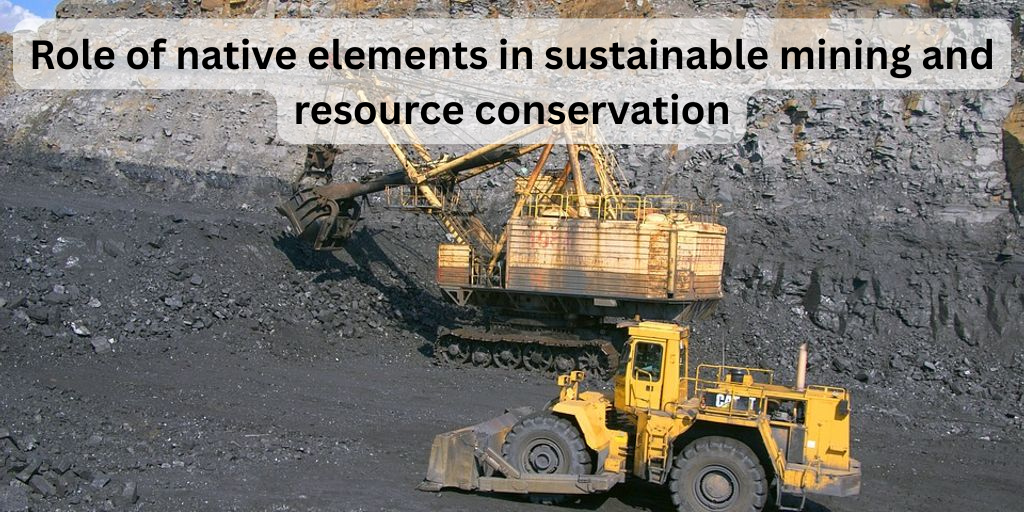
Native elements play a vital role in sustainable mining and resource conservation efforts due to their unique properties and high value in modern technologies. Their extraction, use, and recycling contribute significantly to reducing environmental impacts, improving the efficiency of mining processes, and supporting the transition to a circular economy. Here’s how native elements contribute to sustainability in mining and resource conservation:
1. Efficiency in Extraction and Use
Native elements like gold, silver, copper, platinum, and palladium are highly valued for their natural purity and high efficiency in industrial applications. Their use in various industries helps reduce waste and optimize resource utilization.
Key Benefits:
- High Purity Reduces Processing: Native elements are often found in pure forms or with fewer impurities, which reduces the need for extensive refining and processing. This leads to lower energy consumption and fewer harmful emissions compared to more complex ores that require additional steps for extraction.
- Durable and Long-lasting: Native elements like gold and platinum have excellent corrosion resistance and longevity, meaning they don’t degrade over time and can be used in long-lasting products. This reduces the demand for new materials and helps conserve natural resources over time.
Impact on Sustainability:
- By requiring less energy for extraction and having a longer lifespan in use, native elements help improve resource efficiency and reduce the overall environmental footprint of mining operations.
2. Contribution to Recycling and Circular Economy
Native elements are highly recyclable, making them central to sustainable resource management. Recycling native elements from electronic waste (e-waste), jewelry, and automotive parts can dramatically reduce the need for new mining and lower environmental impacts.
Key Benefits:
- Recyclability: Native elements like gold, silver, and copper are among the most commonly recycled materials in the world. They are easily recovered from products like smartphones, computers, jewelry, and batteries. These metals can be reused multiple times without losing their quality or properties, reducing the need for new mining.
- Economic Incentives: The recycling of native elements is often economically viable due to their high value in both the raw and refined states. This incentivizes the recovery of precious metals from products that would otherwise be discarded, reducing waste and conserving resources.
Impact on Sustainability:
- Recycling helps close the loop on resource use, reducing the pressure on virgin mining operations and cutting down on waste and pollution. This contributes to the circular economy, where materials are reused and recycled indefinitely.
3. Reducing Environmental Impact of Mining
The extraction of native elements often involves less environmental disruption compared to other mining operations that require more extensive processing. Since these elements are often found in their natural, pure form, they don’t require complex separation or chemical treatments that can generate harmful byproducts.
Key Benefits:
- Lower Chemical Usage: In contrast to other minerals, such as sulfide ores, which require chemicals like cyanide or sulfuric acid for extraction, native elements typically do not require toxic chemicals for processing. This reduces the risk of water contamination, acid mine drainage, and other environmental hazards associated with chemical use.
- Less Energy-Intensive: Mining and processing native elements are often less energy-intensive. For example, gold found in its native form requires less energy to refine compared to gold extracted from gold-bearing ores that need cyanidation or other chemical treatments.
Impact on Sustainability:
- The use of native elements in sustainable mining practices helps minimize pollution, energy consumption, and chemical waste. These advantages contribute to a greener mining industry by reducing the carbon footprint and the overall environmental damage.
4. Role in Clean and Renewable Technologies
Native elements such as copper, silver, platinum, and palladium are critical in the development of clean technologies that support renewable energy and energy efficiency.
Key Benefits:
- Copper is essential in solar panels, wind turbines, and electric vehicles (EVs), which are central to the transition to renewable energy. Its electrical conductivity helps optimize energy transmission, while its recyclability supports a sustainable energy system.
- Silver is used in photovoltaic cells in solar panels. The efficiency of silver in capturing solar energy makes it a critical material in reducing reliance on fossil fuels.
- Platinum and palladium are used in hydrogen fuel cells, a clean energy technology that produces electricity without harmful emissions. As catalysts, these metals enable the efficient conversion of hydrogen into power.
Impact on Sustainability:
- The use of native elements in renewable energy technologies helps decarbonize energy production, reduce fossil fuel reliance, and promote energy efficiency. This role is essential in global efforts to mitigate climate change and promote a sustainable energy future.
5. Support for Sustainable Mining Practices and Ethical Sourcing
In recent years, there has been increasing emphasis on ethical sourcing and sustainable mining practices. Native elements are often at the forefront of these efforts due to their high market value and the potential for traceability in sourcing.
Key Benefits:
- Ethical Sourcing: Many industries, particularly in electronics and jewelry, are focusing on ensuring that native elements are sourced ethically, with a focus on fair labor practices and environmental responsibility. This helps to prevent conflict mining and ensures that the extraction of precious metals is not contributing to environmental degradation or social injustices.
- Low Impact Mining: Because native elements are often found in their pure form, their extraction can sometimes be less disruptive to the environment compared to complex ore deposits, making it easier for companies to adhere to sustainable mining standards.
Impact on Sustainability:
- Ethical sourcing practices and low-impact mining techniques reduce the negative social and environmental effects of mining, contributing to fairer labor conditions and more responsible resource extraction.
Conclusion
Native elements, with their unique properties and high recyclability, are central to efforts in sustainable mining and resource conservationMore efficient extraction and reduced environmental disruption.The promotion of a circular economy through recycling.The development of clean energy technologies that support global sustainability goals.Encouraging ethical sourcing and low-impact mining practices that reduce the social and environmental footprint of resource extraction.
Hashtags
#NativeElements #SustainableMining #ResourceConservation #EcoMining #SustainableExtraction #GreenMining #ResponsibleMining #MineralConservation #EcoFriendlyMining #CircularEconomy #MiningSustainability #MiningEfficiency #ConservationEfforts #SustainableResources #CleanTechMining #EfficientMining #EcoConsciousMining #ResourceManagement #NativeMetals #LowImpactMining