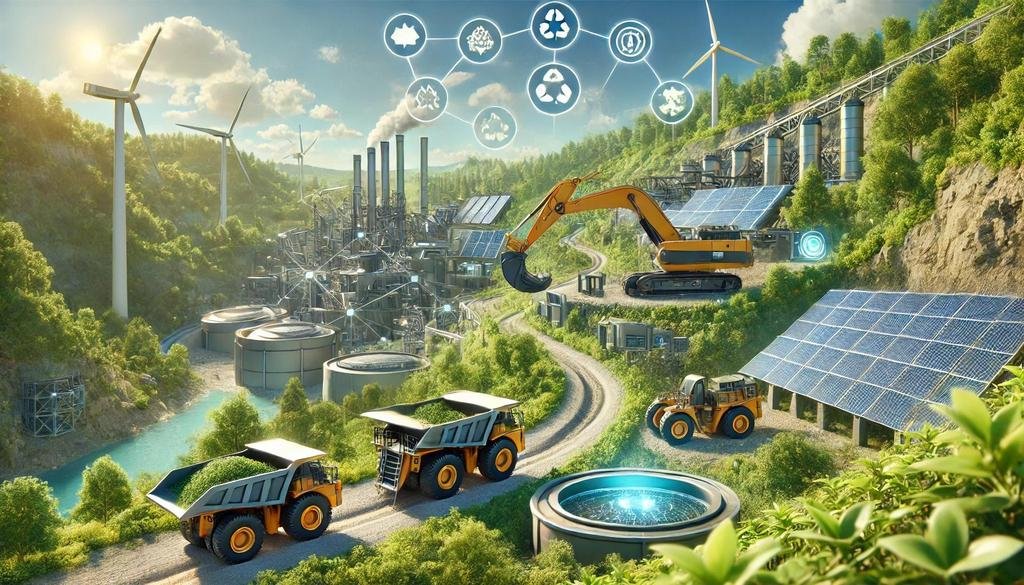
The transition to green energy technologies, such as electric vehicles (EVs), solar panels, and wind turbines, heavily relies on metallic mining. These technologies require a variety of metals, including lithium, cobalt, nickel, copper, rare earth elements, and aluminum, among others. Mining plays a critical role in ensuring a stable supply of these materials to support the clean energy transition.
1. Key Metals in Green Energy Technologies
Several critical metals extracted through mining are essential in renewable energy technologies:
a) Lithium, Cobalt, and Nickel – Battery Storage for EVs
- Lithium: A primary component in lithium-ion batteries, essential for EVs and grid energy storage.
- Cobalt: Improves battery longevity and thermal stability, but supply concerns exist due to its concentration in geopolitically sensitive regions (e.g., the Democratic Republic of the Congo).
- Nickel: Increases battery energy density, improving vehicle range and efficiency.
b) Copper – Electrical Conductivity
- Found in solar panels, EV motors, wind turbines, and charging infrastructure, copper is indispensable for efficient energy transmission and storage.
- The rising demand for EVs and renewables is expected to drive copper consumption significantly.
c) Rare Earth Elements – Wind Turbines and EV Motors
- Neodymium and Dysprosium: Key for producing high-performance permanent magnets used in wind turbines and EV motors.
- These metals are largely mined in China, Australia, and the U.S., with supply chain vulnerabilities due to geopolitical concerns.
d) Silver and Silicon – Solar Panel Production
- Silver is a crucial component in photovoltaic (PV) cells, which convert sunlight into electricity.
- Silicon, derived from quartz mining, is the backbone of semiconductor technology used in solar panels.
e) Aluminum and Zinc – Structural Components
- Aluminum: Lightweight and corrosion-resistant, it is used in EV bodies, wind turbine blades, and solar panel frames.
- Zinc: Essential for galvanization, protecting metal components from corrosion in renewable energy systems.
2. Mining’s Contribution to the Green Energy Supply Chain
a) Raw Material Extraction
Mining provides the raw materials required for manufacturing batteries, solar panels, wind turbines, and other green technologies. Without mining, the production of clean energy infrastructure would be impossible.
b) Refining and Processing
After extraction, metals undergo refining and processing before being incorporated into green technologies. The refining of lithium, nickel, and rare earth elements is energy-intensive but necessary to ensure high-quality materials.
c) Recycling and Circular Economy
- With the rising demand for critical minerals, recycling of battery materials and metals from old electronics is gaining importance.
- However, primary mining remains essential due to the current insufficient scale of metal recycling.
3. Challenges Facing Metallic Mining in Green Energy Supply Chains
Despite its critical role, metallic mining for green energy technologies faces several challenges:
a) Environmental and Social Concerns
- Mining operations can lead to deforestation, habitat destruction, water pollution, and carbon emissions.
- Communities near mines often experience social displacement, human rights violations, and poor working conditions, particularly in cobalt and nickel mines.
b) Geopolitical Supply Risks
- Many key metals (e.g., rare earth elements, lithium, and cobalt) are concentrated in a few countries, creating vulnerabilities in global supply chains.
- Governments are implementing strategies to secure critical mineral supplies, including domestic mining projects and trade agreements.
c) Supply-Demand Imbalances
- The demand for lithium, nickel, and rare earth elements is outpacing supply, leading to price volatility and investment challenges.
- Increased mining investments are needed to meet the projected demand surge for EVs and renewable energy systems.
4. Future Outlook: Ensuring a Sustainable and Resilient Metal Supply Chain
To address these challenges, governments and companies are focusing on:
a) Sustainable Mining Practices
- Using renewable energy in mining operations to reduce carbon footprints.
- Implementing responsible sourcing and ethical mining initiatives.
b) Expanding Recycling Efforts
- Urban mining (extracting metals from electronic waste) can reduce dependence on primary mining.
- Companies are investing in closed-loop battery recycling to recover lithium, cobalt, and nickel.
c) Diversifying Supply Sources
- Countries are exploring domestic mining projects to reduce reliance on a few dominant suppliers.
- Investments in deep-sea mining and alternative mineral extraction methods are being explored.
Conclusion
Metallic mining is a cornerstone of the global supply chain for green energy technologies, providing the critical materials needed for electric vehicles, solar panels, and wind turbines. However, the industry faces challenges related to environmental impact, geopolitical risks, and supply chain vulnerabilities.
To ensure a sustainable and secure supply of critical minerals, the mining sector must adopt greener practices, enhance recycling efforts, and diversify sourcing strategies. As the world transitions to renewable energy, the demand for mined metals will continue to rise, making responsible mining and innovation key to a sustainable future.
Hashtags
#GreenMining #SustainableMetals #CriticalMinerals #BatteryMetals #EVMaterials #SolarMetals #MiningForCleanEnergy #EnergyTransition #EVBatteries #LithiumMining #NickelSupply #CobaltMining #GraphiteMining #BatteryRecycling #RareEarthMagnets #ElectricVehicles #SolarEnergy #WindTurbines #CopperForEnergy #AluminumForSolar #SilverInSolar #MetalsForRenewables #CleanEnergyMaterials #MiningSupplyChain #MetalMarkets #RawMaterials #CircularEconomy #SustainableMining #ResponsibleSourcing #ESGMining