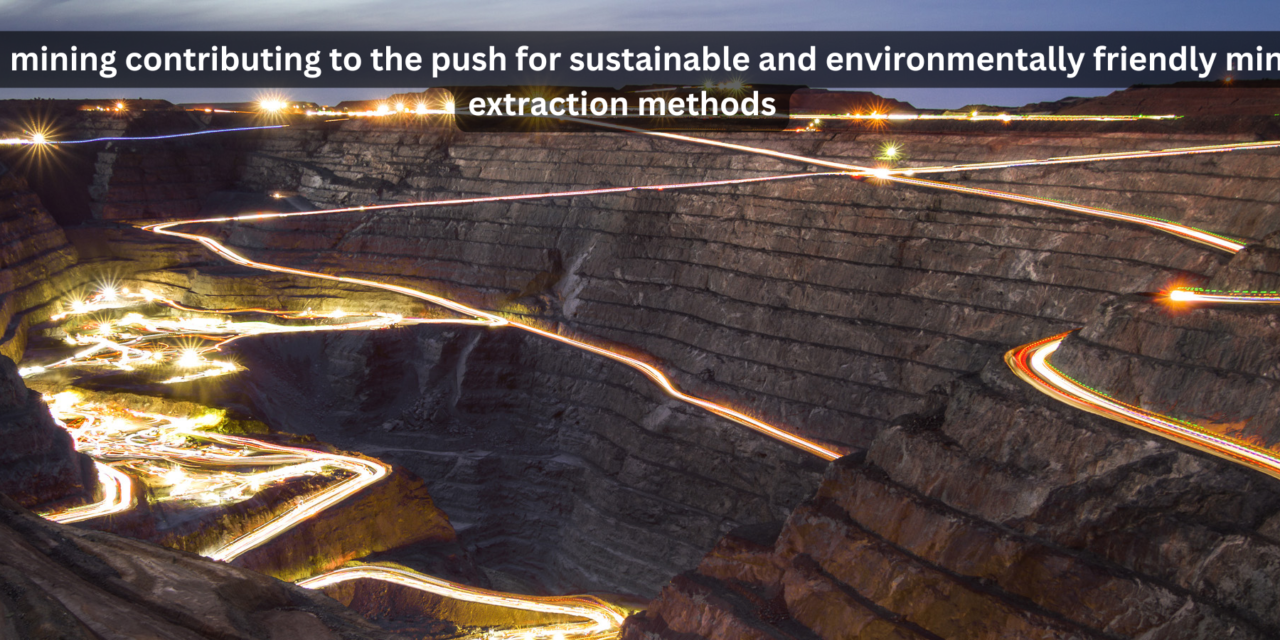
In-situ mining is contributing significantly to the push for more sustainable and environmentally friendly mineral extraction methods. The technology offers a range of benefits that minimize land disruption, reduce environmental impact, and improve resource efficiency compared to conventional mining methods. Here’s how in-situ mining is helping drive sustainability in the mining industry:
1. Minimal Land Disturbance
- Reduced Surface Footprint: Traditional mining methods like open-pit or underground mining require significant land disturbance—clearing large areas, excavation, and the construction of roads, waste storage, and processing facilities. In contrast, in-situ mining involves leaching minerals directly within the ore body without the need for excavation or large-scale surface operations.
- This means there is minimal disruption to the environment, including no deforestation, no habitat destruction, and no soil erosion, making it a far more sustainable approach.
- The land that would otherwise be impacted by a traditional mine (e.g., waste piles, tailings ponds) is largely untouched in in-situ mining operations.
2. Reduced Water Usage
- Water Efficiency: Traditional mining methods use significant amounts of water for tasks like dust suppression, processing, and ore transportation. In-situ mining, particularly when using closed-loop systems, greatly reduces water consumption.
- The use of waterless leaching or low-water leaching techniques is being explored, especially in arid regions, further reducing the environmental impact.
- Moreover, in-situ mining has the ability to recycle leachate solutions, which means that the same water can be reused multiple times, cutting down on overall water requirements.
3. Eco-Friendly Leaching Solutions
- Less Harmful Chemicals: Traditional mineral extraction often relies on toxic chemicals, such as cyanide in gold mining or sulfuric acid for copper, which can have long-lasting negative effects on the surrounding ecosystem. In-situ mining is increasingly adopting eco-friendly leaching agents that are biodegradable and less hazardous.
- Bio-based leaching is gaining attention, where naturally occurring microorganisms, such as bacteria, help extract metals from ores in a more environmentally safe way. This process reduces the need for harmful chemical reagents.
- Other approaches are using non-toxic or biodegradable chemical agents, such as organic acids, to replace the more harmful chemicals traditionally used in the leaching process.
4. Reduced Carbon Emissions
- Lower Energy Consumption: In-situ mining operations use much less energy compared to conventional mining methods. Since in-situ mining doesn’t require the large-scale excavation, crushing, grinding, and transportation of ore, it consumes significantly less fuel and generates fewer greenhouse gas emissions.
- The energy savings come not only from avoiding the use of heavy machinery but also from reducing the transportation distance since the ore is processed in place rather than being hauled over long distances.
- Automated and Remote Operations: The automation of mining operations, including robotic sensors and remote-controlled injection systems, reduces the need for human intervention in hazardous environments. This decreases the energy demands of human transportation and improves operational safety, further contributing to energy efficiency.
5. Lower Impact on Water Resources and Groundwater
- Prevention of Groundwater Contamination: In conventional mining, tailings ponds and waste rock piles can leak into nearby rivers, lakes, or aquifers, contaminating local groundwater with chemicals and heavy metals. In-situ mining eliminates the need for waste disposal sites like tailings ponds.
- The closed-loop systems and careful management of leachates in in-situ mining operations prevent the contamination of surrounding water resources, ensuring that only a minimal amount of water is used and no toxic runoff is generated.
- Additionally, groundwater is actively monitored during the leaching process to ensure the chemicals used do not seep into surrounding aquifers, and any potential issues can be addressed promptly.
6. Reduced Emissions and Dust Generation
- Lower Dust Generation: Dust generated by excavation, hauling, and processing in conventional mining can be harmful to both human health and the environment. In-situ mining eliminates most of these issues because there is no excavation or transportation of materials.
- There are also fewer emissions from trucks, bulldozers, and crushers, leading to lower air pollution and fewer greenhouse gas emissions associated with the operation.
7. Efficient Resource Utilization and Waste Minimization
- High Recovery Rates: In-situ mining allows for direct extraction of metals from ore bodies, resulting in a higher recovery rate of the minerals. This efficiency reduces the need for multiple extraction attempts and minimizes waste generation.
- By using more precise leaching technologies, companies can ensure that only the ore is affected, avoiding the large-scale waste production associated with conventional mining methods (such as waste rock or tailings).
- Less Material Handling: Traditional methods generate huge amounts of waste rock that must be stored and managed. In in-situ mining, however, the minerals are extracted in place, meaning that no waste material is physically transported or stored. This eliminates the need for massive waste storage infrastructure, reducing the environmental footprint.
8. Reclamation and Land Restoration
- Easier Land Restoration: Because in-situ mining doesn’t disturb the surface as much as traditional methods, the process of land restoration is simpler and can begin immediately after the mineral extraction is complete.
- Revegetation and habitat restoration can proceed much faster, as the ecosystem hasn’t been significantly altered, and there is less waste to manage. In some cases, the land can be returned to its natural state without the need for extensive remediation efforts.
- In-situ mining operations are also typically smaller in scale and have a lower visual and physical footprint, making them easier to integrate into local landscapes and ecosystems after mining is complete.
9. Community and Stakeholder Engagement
- Reduced Social Disruptions: Because in-situ mining doesn’t require large-scale surface excavation or population displacement, it tends to cause less social disruption. Communities living near in-situ mining sites may be less impacted by noise, dust, and traffic compared to conventional mining.
- The smaller scale and more targeted operations can also reduce conflicts with local populations and minimize the risks of displacement, allowing for smoother community relations and better stakeholder engagement.
10. Long-Term Sustainability of Mining Operations
- Resource Longevity: In-situ mining allows companies to extract minerals over a much longer period, often from hard-to-reach ore bodies that would otherwise be uneconomical to mine using traditional methods. This can extend the life of a mine while still maintaining high resource efficiency.
- The ability to extract minerals without disrupting the landscape or requiring constant infrastructure development makes in-situ mining a more sustainable option for resource extraction in the long run.
Conclusion
In-situ mining is playing an important role in making the mining industry more sustainable by reducing its environmental footprint, lowering energy consumption, improving water usage efficiency, and providing eco-friendly alternatives to traditional chemical leaching methods. The technology allows for the extraction of valuable minerals with minimal disturbance to ecosystems and human communities, positioning it as a key player in the future of environmentally responsible mining.
Hashtags
#SustainableMining #EcoFriendlyMining #GreenMining #InSituSustainability #EcoMiningSolutions #ResponsibleExtraction #MiningForTheFuture #SustainableResourceUse #CleanMining #EnvironmentallyFriendlyMining #EcoConsciousMining #GreenExtraction #LowImpactMining #MiningInnovation #SustainableMinerals #MineralSustainability #EcoResponsibleMining #MiningAndEnvironment #FutureOfMining #SustainablePractices