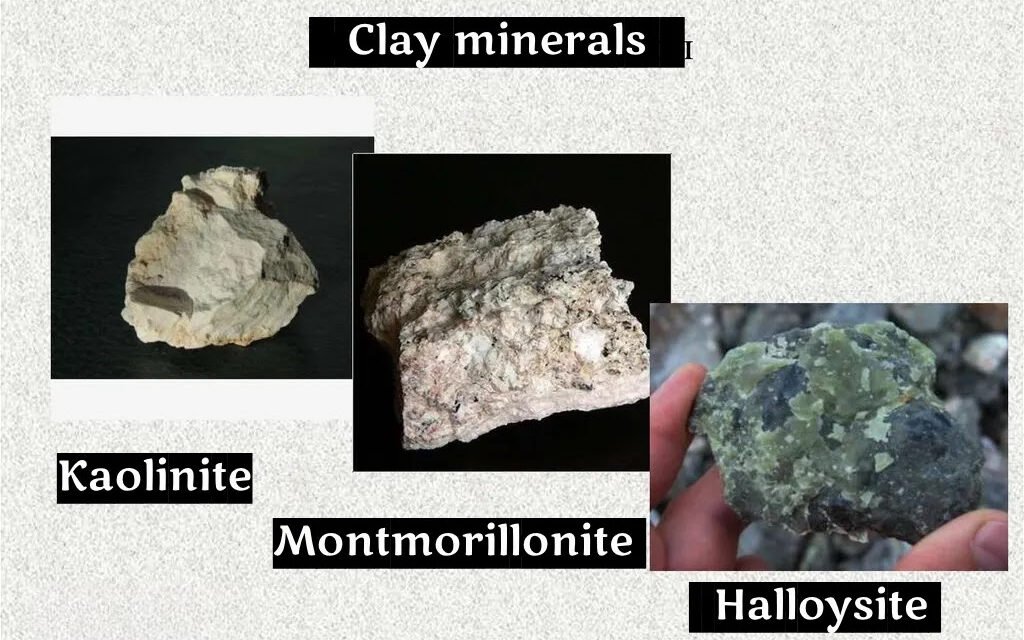
Clay minerals are a group of naturally occurring minerals composed primarily of fine-grained minerals that are typically formed through the weathering and alteration of rocks, especially silicate minerals. These minerals are predominantly made up of hydrous alumino-silicates and are characterized by their small particle size and layered crystal structures. Common clay minerals include kaolinite, illite, montmorillonite, and smectite, each having unique chemical and physical properties.
Importance of Clay Minerals in the Mining and Mineral Processing Industry
- Wide Range of Industrial Applications:
- Ceramics and Refractories: Clay minerals are fundamental to the production of ceramics, bricks, tiles, and other refractory materials. Their ability to retain shape and withstand high temperatures makes them ideal for such uses.
- Paper Industry: Clay minerals, especially kaolinite, are used as fillers and coating pigments in paper production. They improve the paper’s opacity, brightness, and smoothness.
- Construction Materials: Clays are essential components in the production of cement, concrete, and asphalt. Their binding properties make them useful for producing durable construction materials.
- Paints and Coatings: Clay minerals are used as additives in paints and coatings to improve their texture, smoothness, and sheen. They can also act as thickeners and provide a base for pigmentation.
- Drilling Fluids: In the oil and gas industry, clay minerals such as bentonite are used in drilling fluids to help stabilize boreholes and control fluid loss.
- Beneficiation and Processing:
- Separation and Purification: Clays can play an essential role in the beneficiation and purification of other minerals. In some mining operations, clay minerals are removed from ore deposits to improve the quality of the extracted materials.
- For example, kaolin (a type of clay) is used for its white color and purity in the production of paper, plastics, and paints.
- Flotation and Filtration: In mineral processing, clays can be used to improve the separation of valuable minerals through flotation or filtration. Their fine particle size allows them to interact with other minerals and enhance recovery rates during processing.
- Separation and Purification: Clays can play an essential role in the beneficiation and purification of other minerals. In some mining operations, clay minerals are removed from ore deposits to improve the quality of the extracted materials.
- Environmental and Waste Management:
- Soil Remediation: Clay minerals are widely used for environmental cleanup, particularly in soil and water remediation. Their ability to adsorb contaminants, such as heavy metals and organic pollutants, makes them valuable in managing industrial waste and pollution.
- Wastewater Treatment: Certain clay minerals, such as bentonite and zeolites, are utilized in water treatment processes due to their adsorptive and ion-exchange properties, making them effective for removing impurities from industrial wastewater.
- Geotechnical Engineering:
- Stabilizing Soils: Clays are commonly used in the construction of foundations, embankments, and roads. Their fine particle size and cohesive properties make them essential for stabilizing and reinforcing soils, preventing erosion, and ensuring the durability of infrastructure projects.
- Geosynthetic Materials: Clays, especially bentonite, are used in the production of geosynthetic materials like clay liners for landfills and waste containment systems. These materials help in creating impermeable barriers to control the movement of liquids and gases.
- Role in the Global Supply Chain:
- Global Demand: Clay minerals are critical in the global supply chain for a variety of industries, including construction, manufacturing, and agriculture. The mining and processing of clay minerals support numerous industries that rely on them for both raw materials and specialized products.
- Economic Significance: In some countries, clay mining is a significant economic activity, with the production of ceramics, bricks, and other clay-based products being important contributors to local economies and employment.
Unique Properties of Clay Minerals
The significance of clay minerals in the mining and processing industry can also be attributed to several unique properties:
- Plasticity: When mixed with water, many clay minerals become plastic, allowing them to be molded and shaped easily. This is especially important in ceramics, bricks, and pottery.
- Cohesion and Binding: Clays are known for their ability to bind with other materials, which makes them useful in a variety of industrial processes, such as cement production and in the preparation of drilling muds.
- Adsorptive and Ion-Exchange Properties: Some clay minerals, particularly montmorillonite and bentonite, have a high surface area and can adsorb or exchange ions. This makes them useful in a variety of applications, from wastewater treatment to soil stabilization.