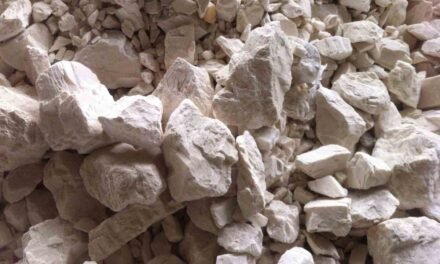
Acid leaching is a commonly used process for extracting metals from carbonate minerals, especially when the metal is present in a carbonate form like copper carbonate (e.g., malachite), zinc carbonate (e.g., smithsonite), magnesium carbonate (e.g., magnesite), and copper-bearing carbonate ores. The process involves using acidic solutions to selectively dissolve the metal from its carbonate mineral host, leaving the gangue materials behind. Here’s a breakdown of how acid leaching works in extracting metals from carbonate minerals:
1. Principle of Acid Leaching
The process relies on the fact that acid can react chemically with carbonate minerals to dissolve the desired metal and convert the carbonate into a soluble form. The most common acids used for leaching carbonate ores are sulfuric acid (H₂SO₄), hydrochloric acid (HCl), and nitric acid (HNO₃). The acid reacts with the carbonate ions (CO₃²⁻) in the mineral, breaking them down and releasing the metal as a soluble metal salt.
2. Chemical Reactions in Acid Leaching
The specific chemical reaction depends on the metal in the carbonate mineral. Here are some examples:
a. Copper Carbonates (e.g., Malachite or Azurite)
For copper carbonate (CuCO₃), typically found as malachite (Cu₂CO₃(OH)₂) or azurite (Cu₃(CO₃)₂(OH)₂), sulfuric acid is commonly used:
- Malachite:
Cu2CO3(OH)2+2H2SO4→2CuSO4+2H2O+CO2\text{Cu}_2\text{CO}_3(\text{OH})_2 + 2\text{H}_2\text{SO}_4 \rightarrow 2\text{CuSO}_4 + 2\text{H}_2O + \text{CO}_2Cu2CO3(OH)2+2H2SO4→2CuSO4+2H2O+CO2 - The copper sulfate (CuSO₄) formed is soluble in water and can be further processed to extract copper.
b. Zinc Carbonates (e.g., Smithsonite)
For zinc carbonate (ZnCO₃), sulfuric acid is used to form zinc sulfate (ZnSO₄):
- Smithsonite:
ZnCO3+H2SO4→ZnSO4+CO2+H2O\text{ZnCO}_3 + \text{H}_2\text{SO}_4 \rightarrow \text{ZnSO}_4 + \text{CO}_2 + \text{H}_2OZnCO3+H2SO4→ZnSO4+CO2+H2O - The zinc sulfate is then processed in subsequent steps (like solvent extraction or electrowinning) to recover zinc metal.
c. Magnesium Carbonates (e.g., Magnesite)
For magnesium carbonate (MgCO₃), the reaction with sulfuric acid produces magnesium sulfate (MgSO₄):
- Magnesite:
MgCO3+H2SO4→MgSO4+CO2+H2O\text{MgCO}_3 + \text{H}_2\text{SO}_4 \rightarrow \text{MgSO}_4 + \text{CO}_2 + \text{H}_2OMgCO3+H2SO4→MgSO4+CO2+H2O - Magnesium sulfate is soluble and can be used for further processing in the production of magnesium metal or magnesium compounds.
3. Steps Involved in Acid Leaching
- Preparation of Ore: The ore is typically crushed and ground to increase the surface area for the leaching process. Finer particles provide a better reaction surface for the acid.
- Leaching Process: The ground ore is then mixed with acid (often sulfuric acid) in agitated tanks, heap leach piles, or vat leaching systems.
- In heap leaching, the acid is applied to the ore in a large heap, where it trickles down through the pile, dissolving metals over time.
- In tank leaching, the ore is submerged in a tank filled with acid and mixed to facilitate quicker dissolution of the metal.
- Chemical Reaction: During the leaching process, the acid dissolves the metal from the ore, creating a metal-rich solution (called the pregnant solution) that contains the dissolved metal as a soluble compound (such as a sulfate).
- Separation and Recovery:
- The metal-rich solution is then treated to precipitate the metal or to convert it into a more easily recoverable form.
- For example, copper can be recovered from copper sulfate through solvent extraction and electrowinning, while zinc is often recovered via electrowinning or precipitation.
- The leaching process can also produce by-products like carbon dioxide (CO₂), which must be managed to prevent environmental damage.
- Post-Leaching: After the metal is removed, the residual waste (tailings) is often processed to extract any remaining valuable metals or treated to neutralize any harmful acidic residue.
4. Advantages of Acid Leaching
- Selective Extraction: Acid leaching can selectively dissolve the metal of interest while leaving other minerals behind, especially when the ore contains multiple components.
- Low-Cost Processing: Compared to other extraction methods like smelting, acid leaching is often more cost-effective, particularly for ores with lower metal concentrations.
- Low Energy Requirements: Acid leaching typically requires less energy than high-temperature smelting or roasting processes.
- Wide Application: Acid leaching is used for a variety of carbonate ores, including copper, zinc, magnesium, and even nickel in some cases.
5. Challenges of Acid Leaching
- Acid Consumption: The amount of acid required for leaching can be quite high, leading to increased operational costs. Efficient acid recovery and reuse systems are often implemented to minimize this.
- Environmental Concerns: The process generates acidic waste and gas emissions (such as CO₂) that must be carefully managed to minimize environmental impact.
- Impurity Contamination: Sometimes, unwanted impurities may also dissolve in the acid, leading to the contamination of the metal-rich solution. Additional purification steps are often needed to remove these impurities.
6. Applications in Industry
- Copper Extraction: The most common application of acid leaching is in the extraction of copper from oxide and carbonate ores. Copper sx-ew (solvent extraction-electrowinning) is a popular method.
- Zinc Extraction: Sulfuric acid leaching is widely used to extract zinc from carbonate ores like smithsonite.
- Magnesium Extraction: Magnesite ores are leached with sulfuric acid to produce magnesium sulfate, which can be processed further for magnesium production.
- Nickel Extraction: Lateritic nickel ores, which contain nickel in carbonate or silicate forms, are sometimes processed via acid leaching.
Acid leaching is an effective method for extracting metals from carbonate ores like copper carbonate, zinc carbonate, and magnesium carbonate.