Sulfide minerals are a group of minerals in which metal cations are bonded to sulfur (S²⁻) ions. They are typically formed from the reaction of metal-bearing fluids with sulfur-rich environments, often in hydrothermal conditions. Sulfide minerals are important in the mining industry because they are significant sources of many essential metals, particularly copper, zinc, lead, nickel, silver, and gold.
Key Characteristics of Sulfide Minerals:
- Chemical Composition: Sulfide minerals consist of a metal element bonded to sulfur, forming a general chemical formula of MXₓSᵧ, where M represents the metal cation (e.g., copper, lead, nickel), and S is sulfur.
- Common Sulfide Minerals:
- Pyrite (FeS₂): Often called “fool’s gold,” pyrite is the most abundant sulfide mineral, though it is not typically processed for gold but can influence acid mine drainage when oxidized.
- Chalcopyrite (CuFeS₂): The most important ore of copper, containing both copper and iron.
- Galena (PbS): The primary ore of lead.
- Sphalerite (ZnS): The principal ore of zinc.
- Nickel sulfides (e.g., pentlandite (Fe,Ni)₆S₈): Key ores for nickel extraction.
- Cinnabar (HgS): The main ore of mercury.
Importance of Sulfide Minerals in the Mining Industry:
Sulfide minerals are economically important because they serve as the primary ores for extracting a range of valuable metals used in various industries. Here’s why they are critical in mining:
1. Source of Key Metals
Sulfide ores are major sources of non-ferrous metals such as:
- Copper: Chalcopyrite is the most important copper ore, used extensively in electrical wiring, electronics, and plumbing.
- Lead: Galena is the most common lead ore, used in batteries, radiation shielding, and as an alloy.
- Zinc: Sphalerite is the primary ore of zinc, which is used for galvanizing steel, in batteries, and as an alloy in brass.
- Nickel: Sulfide ores like pentlandite provide nickel, which is essential for making stainless steel, alloys, and batteries for electric vehicles.
- Silver: While not a primary ore, silver is often found as a by-product in sulfide ores like galena (lead sulfide) or argentite (Ag₂S), used in electronics, jewelry, and as a store of value.
- Gold: Gold can be found in some sulfide ores, especially when it occurs as gold-bearing sulfides in ores like arsenopyrite.
2. High Metal Concentration
- Sulfide ores typically have a higher concentration of the metal of interest compared to oxide ores, making them highly efficient for mining.
- Example: Chalcopyrite can contain up to 34% copper by weight, whereas copper oxide ores typically have lower copper content.
- This high-grade content makes sulfide minerals attractive for mining operations, as they often result in more efficient and cost-effective extraction compared to other types of ores.
3. Processing and Refining
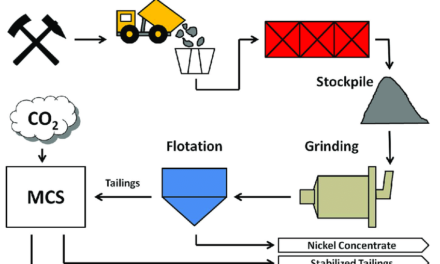
- Sulfide minerals are processed using pyrometallurgical methods, such as roasting, smelting, and flotation, which are highly effective at separating valuable metals from gangue (waste material).
- Flotation is commonly used to concentrate sulfide ores (e.g., separating copper sulfides from gangue in chalcopyrite ores) before smelting.
- Smelting involves heating the sulfide ore in a furnace, often with a reducing agent (e.g., coke) to separate the metal from sulfur, producing metallic copper, zinc, nickel, or lead.
4. Industrial and Technological Uses
- Metals extracted from sulfide minerals are vital for the production of high-performance materials used in a wide range of industries:
- Copper: Used in electrical wiring, electronics, renewable energy technologies (e.g., solar panels, wind turbines), and construction.
- Lead: Used in batteries (especially lead-acid batteries), radiation shielding, and in various industrial applications.
- Zinc: Primarily used for galvanizing steel to prevent corrosion, as well as in die-casting, alloys, and batteries.
- Nickel: Essential for producing stainless steel, alloying for high-strength materials, and in electric vehicle batteries.
- Silver: Used in electronics, photography, jewelry, and as an investment asset.
5. Economic Value
- Sulfide ores contribute significantly to the global economy by providing materials for industries such as construction, electronics, automotive manufacturing, energy production, and consumer goods.
- As a result, mining sulfide ores supports job creation, infrastructure development, and technological advancements worldwide.
6. Environmental and Sustainability Considerations
Although sulfide minerals are crucial to the mining industry, they come with significant environmental challenges:
- Acid Mine Drainage (AMD): When sulfide minerals like pyrite (FeS₂) are exposed to oxygen and water, they oxidize and release sulfuric acid, leading to acid mine drainage (AMD). This acid can dissolve heavy metals (e.g., arsenic, cadmium) and contaminate surrounding soil and water bodies, harming ecosystems and wildlife.
- Sulfur Dioxide (SO₂) Emissions: The roasting and smelting of sulfide ores can release sulfur dioxide, a harmful gas that contributes to acid rain and air pollution.
Solutions to mitigate environmental impact:
- Environmental Monitoring and Control: Implementing effective monitoring systems for water quality and air emissions around mining operations can help detect and mitigate AMD and SO₂ emissions.
- Acid Neutralization: Using alkaline materials (e.g., lime or gypsum) to neutralize sulfuric acid can help control AMD and minimize environmental damage.
- Sulfur Capture: Installing flue gas desulfurization systems during smelting can capture sulfur dioxide and convert it into a usable by-product, such as sulfuric acid.
- Bioremediation: Using natural or engineered microbial processes to neutralize or treat AMD can provide a more sustainable solution to the environmental impact of sulfide mineral processing.