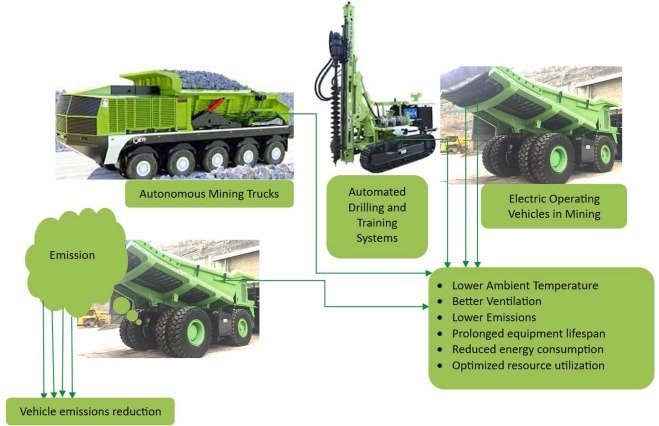
Emerging trends in sustainable surface mining are focused on reducing environmental impacts, improving resource efficiency, and adopting technologies that minimize harm to ecosystems while meeting the demand for critical minerals. These trends reflect an increasing commitment to eco-friendly practices and low-impact mining technologies. Here are the key trends shaping the future of sustainable surface mining:
1. Integration of Renewable Energy Sources
Trend: Mining companies are incorporating renewable energy sources, such as solar, wind, and hydroelectric power, to reduce reliance on fossil fuels and lower greenhouse gas emissions.
- Solar-Powered Mining Operations: Solar panels are being used to power mine sites, especially in remote areas where the electricity grid is unreliable or unavailable. Some mines are investing in large-scale solar farms to meet their energy needs.
- Impact: Significant reduction in carbon emissions, lower operational costs, and greater energy security.
- Hybrid Systems: Hybrid power systems that combine renewable energy with traditional power sources like diesel generators are becoming more common in mining operations, improving energy efficiency.
- Impact: Reduced fuel consumption and emissions, improving the sustainability of mining operations.
2. Adoption of Electric and Hybrid Mining Equipment
Trend: The use of electric and hybrid mining equipment is increasing to replace traditional diesel-powered machinery. Electric haul trucks, excavators, and drills are being developed and deployed to minimize environmental impact.
- Electric Haul Trucks: Companies like Caterpillar and Komatsu have developed electric-powered haul trucks that produce zero emissions, making them more environmentally friendly and cheaper to operate in the long term.
- Impact: Lower fuel consumption, reduced greenhouse gas emissions, and quieter operations, which also improve worker health and safety.
- Electric and Hybrid Drilling Equipment: Electric drills and hybrid mining machinery are gaining traction as they reduce noise pollution, lower maintenance costs, and improve fuel efficiency.
- Impact: Reduced operational costs and environmental footprint, especially in terms of diesel use and air quality.
3. Use of Advanced Data Analytics and AI for Resource Optimization
Trend: The use of artificial intelligence (AI), machine learning, and advanced data analytics is helping mining companies optimize resource extraction and reduce waste.
- AI-Powered Exploration: AI and machine learning algorithms are being used to improve exploration and resource modeling, helping companies locate high-grade deposits more accurately and avoid unnecessary extraction of low-value ore.
- Impact: More efficient use of resources, lower waste generation, and reduced environmental disruption.
- Resource Recovery Optimization: AI can optimize drilling, blasting, and extraction methods to ensure that the maximum amount of valuable material is recovered with minimal waste and energy consumption.
- Impact: Higher recovery rates, less waste generation, and improved efficiency in material handling.
4. Eco-Friendly Mining Processes and Green Chemistry
Trend: Mining companies are increasingly adopting green chemistry and eco-friendly processes to reduce the use of toxic chemicals and minimize environmental degradation.
- Bioleaching and Bioremediation: Using biological processes, such as bioleaching and bioremediation, to extract minerals and clean contaminated sites is gaining traction as a sustainable alternative to traditional chemical-based extraction methods.
- Impact: Reduced environmental toxicity, lower chemical use, and safer mining practices.
- Non-Toxic Flotation Agents: The development of non-toxic and biodegradable flotation agents is reducing the environmental impact of the mineral separation process, particularly in gold and copper mining.
- Impact: Less water and chemical pollution, which is especially important in water-scarce areas.
- Hydrometallurgical Processes: New techniques in hydrometallurgy, such as leaching with environmentally friendly solvents, are replacing more harmful methods like cyanide use, reducing both toxicity and energy consumption.
- Impact: Less environmental contamination and safer processing methods.
5. Water Conservation and Recycling Technologies
Trend: Water management technologies that promote conservation, recycling, and reuse are increasingly being implemented to reduce water consumption in mining operations, especially in arid regions.
- Closed-Loop Water Systems: Mines are adopting closed-loop systems that recycle water used in processing, minimizing the need for fresh water from external sources.
- Impact: Reduced water consumption, less strain on local water resources, and lower water-related costs.
- Desalination Technologies: In areas with limited freshwater resources, mines are exploring desalination technologies to convert seawater into usable water for processing and other operational needs.
- Impact: More sustainable water use and reduced reliance on freshwater sources.
- Waterless Processing Technologies: Some mines are investing in dry processing techniques, such as dry beneficiation, which eliminate the need for water in the ore separation process.
- Impact: Greatly reduced water consumption, which is especially important in regions experiencing water scarcity.
6. Mine Reclamation and Land Restoration
Trend: Reclamation and land restoration efforts are becoming an integral part of the mining process. Revegetation, soil stabilization, and land rehabilitation are prioritized to restore ecosystems after mining operations.
- Progressive Reclamation: Many surface mines are adopting progressive reclamation, which involves reclaiming land during mining operations rather than after the mine is closed. This approach helps ensure that environmental damage is minimized during the mining process.
- Impact: Faster ecosystem restoration, reduced environmental footprint, and better community relations.
- Revegetation and Biodiversity Programs: Post-mining reclamation efforts often include planting native vegetation and restoring biodiversity to disturbed areas. Some companies also incorporate wildlife corridors to allow animals to safely pass through the area.
- Impact: Restoration of ecosystems, improved biodiversity, and enhanced community engagement.
7. Zero-Waste Mining
Trend: Zero-waste mining aims to maximize the recycling and reuse of materials extracted during mining operations, minimizing waste and landfill use.
- Waste-to-Resource Technologies: Mining companies are exploring ways to reuse tailings (the waste left after extracting ore) by converting them into useful products, such as construction materials or even processing them for further resource recovery.
- Impact: Reduced waste, improved resource efficiency, and lower environmental impact from waste disposal.
- Minimizing Overburden Disposal: More efficient management of overburden (waste material removed during mining) is also a key component of zero-waste practices, with some companies focusing on reusing overburden for reclamation or constructing barriers to reduce environmental risks.
- Impact: Reduced land disturbance and better land restoration practices.
8. Reduced Carbon Footprint through Carbon Capture and Storage (CCS)
Trend: Mining companies are investigating carbon capture and storage (CCS) technologies to capture CO₂ emissions from mining operations and store them safely underground or use them in other processes.
- CCS Implementation: While still emerging, CCS has the potential to significantly reduce the carbon footprint of surface mining, especially in regions where fossil fuels are used in the extraction and processing stages.
- Impact: Reduced greenhouse gas emissions, contributing to the overall sustainability of mining operations.
9. Digitalization and Remote Monitoring for Sustainable Mining
Trend: The use of digital technologies like IoT sensors, drones, and real-time monitoring systems is enabling more efficient and sustainable mining operations by providing detailed data on environmental impacts, energy use, and operational performance.
- Drones for Environmental Monitoring: Drones equipped with sensors are being used to monitor environmental conditions, such as air quality, water quality, and land reclamation efforts, to ensure that mining operations stay within sustainable limits.
- Impact: Enhanced environmental oversight, reduced impact on ecosystems, and better compliance with regulations.
- Remote Monitoring Systems: These systems help monitor equipment performance, energy usage, and environmental parameters, providing mining operators with real-time data to optimize operations and reduce environmental harm.
- Impact: Better management of resource consumption, enhanced safety, and more efficient operations.
10. Community Engagement and Social Responsibility
Trend: Sustainable surface mining practices are increasingly incorporating community engagement and social responsibility, ensuring that mining operations benefit local communities and respect cultural and environmental values.
- Local Partnerships: Mining companies are collaborating with local communities, governments, and NGOs to create sustainable development plans that balance economic growth with environmental protection and social responsibility.
- Impact: Improved community relations, sustainable development practices, and better social outcomes.
Conclusion
The shift toward sustainable surface mining is driven by a combination of technological advancements, regulatory pressures, and growing public awareness of environmental issues. Eco-friendly practices such as renewable energy use, electric mining equipment, water conservation, and green chemistry are making mining operations more efficient, safer, and less harmful to the environment. As the industry continues to innovate, these technologies and practices will further reduce the environmental impact of surface mining and contribute to a more sustainable and responsible approach to resource extraction.
Hashtags
#SustainableMining #EcoFriendlyMining #LowImpactMining #GreenMining #EcoMiningTech #SustainableSurfaceMining #CleanMining #MiningInnovation #LowCarbonMining #MiningForTheFuture #MiningTechForGood #GreenMiningSolutions #MiningSustainability #MiningEnvironmentalImpact #EcoConsciousMining #ResponsibleMining #MiningWithPurpose #CircularEconomyMining #MiningAndNature #FutureOfMining