The most commonly mined phosphate minerals are primarily apatite and its variants. These minerals are crucial sources of phosphorus, which is essential for fertilizers, animal feed, and a range of industrial applications. Here’s a breakdown of the key phosphate minerals, their characteristics, and their industrial uses:
1. Apatite
Apatite is the most important and abundant group of phosphate minerals, typically found in igneous, metamorphic, and sedimentary rocks. Apatite is a calcium phosphate mineral, and its most common forms are fluorapatite, chlorapatite, and hydroxyapatite.
Key Forms of Apatite:
- Fluorapatite (Ca₅(PO₄)₃F): This is the most commonly mined and commercially significant form of apatite.
- Chlorapatite (Ca₅(PO₄)₃Cl): Found less commonly, it contains chlorine instead of fluorine.
- Hydroxyapatite (Ca₅(PO₄)₃OH): This is the form of apatite that naturally occurs in bone and teeth.
Key Industrial Applications:
- Fertilizer Production: Apatite is the primary source of phosphorus for fertilizer production. Phosphate rock, primarily made up of apatite, is processed to create:
- Single Superphosphate (SSP): A fertilizer that combines phosphate rock with sulfuric acid to produce water-soluble phosphorus.
- Triple Superphosphate (TSP): Made from apatite by reacting it with phosphoric acid to create a more concentrated form of phosphorus.
- Ammonium Phosphate Fertilizers (MAP and DAP): These fertilizers are produced by reacting phosphate rock with ammonia.
- Animal Feed: Phosphates derived from apatite are also used in animal feed to provide essential phosphorus for livestock, particularly in poultry, swine, and cattle.
- Water Treatment: Fluorapatite can be used in water treatment processes to remove heavy metals, particularly in areas where high levels of contaminants need to be treated.
- Chemical and Industrial Uses:
- Phosphoric Acid: Apatite is a key source for producing phosphoric acid, which is used in industries ranging from detergents to metal treatment.
- Detergents and Cleaning Agents: Phosphate compounds derived from apatite minerals are used in cleaning products, although their use has been regulated in some regions due to environmental concerns like eutrophication.
- Ceramics and Glass: Phosphates are sometimes added to ceramic and glass formulations to improve their physical properties, such as durability and heat resistance.
2. Vivianite (Fe₄(PO₄)₃·8H₂O)
Vivianite is a hydrated iron phosphate mineral, typically found in sedimentary and volcanic rock formations. It is less common than apatite but still significant in certain contexts.
Key Industrial Applications:
- Water Treatment: Vivianite can be used in phosphate removal from water, especially in environments with high iron content.
- Pigment Production: Some forms of vivianite are used as a source of blue pigment in certain applications, although this use is less common today.
3. Monazite (Ce,La,Th)PO₄
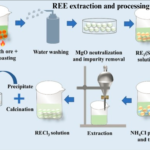
Monazite is a rare-earth phosphate that contains rare-earth elements (REEs) like cerium, lanthanum, and thorium. Although it is a phosphate mineral, it is not primarily mined for its phosphorus content but rather for its rare earth elements.
Key Industrial Applications:
- Rare Earth Extraction: Monazite is primarily mined for its rare earth elements, which are used in a wide range of industries, from electronics and green technologies (e.g., wind turbines, electric vehicles) to nuclear energy (due to thorium content).
- Phosphorus Extraction: Although not its main use, monazite can still be processed to recover phosphorus for fertilizer applications.
4. Struvite (NH₄MgPO₄·6H₂O)
Struvite is a phosphate mineral formed by the combination of ammonium (NH₄⁺), magnesium (Mg²⁺), and phosphate (PO₄³⁻). It is often found in wastewater treatment environments.
Key Industrial Applications:
- Fertilizer Production: Struvite is increasingly being used as a slow-release phosphate fertilizer due to its low solubility, which helps reduce nutrient runoff and improves fertilizer efficiency.
- Wastewater Treatment: Struvite crystals are sometimes intentionally formed in wastewater treatment plants to recover phosphorus from waste streams. This process not only reduces phosphorus pollution but also provides a useful byproduct for fertilizer.
5. Ca-Mg Phosphates (E.g., Mimetite, Pyromorphite)
These are less common phosphate minerals found in certain secondary mineral deposits.
Key Industrial Applications:
- Phosphorus Fertilizers: Some of these minerals are processed for use in fertilizer production or as a source of phosphoric acid.
- Research and Technology: Minerals like mimetite and pyromorphite are also of interest in mineralogy and material science for their unique properties and behavior in natural systems.